
- Hiding Fields on the Checkout Page
- Installing WooCommerce
- Using WooCommerce
- Adding Products in WooCommerce
- Using Your Theme's Header & Footer in a Step
- Embedding a Checkout Form on the Checkout Page
- Hiding WooCommerce Pages and Products
- Using Pricing Tables
- Adding an Affiliate Program
- Setting a Funnel as the Homepage
- GDPR Compliance
- Excluding CartFlows Pages from Caching
- Creating Variable Products
- Placing Shortcode in the Right Places
- Displaying a Terms and Conditions Checkbox
- Creating a Marketing Sales Funnel
- Enabling Fusion Page Builder on CartFlows Steps
- Passing Variables as Query Parameters to a URL
- Highlighting a Product on the CartFlows Checkout Page
- Styling the Highlight Product Section
- Collecting User Contact Data and Redirecting to the Checkout Page
- Setting a Default Product in Product Options
- How to Hide CartFlows Funnel Pages from Search Engines
- Dynamic Offers aka Rule Engine
- Instant Layout for Checkout and Thank You Step
- Adding Products from the URL to the Checkout Page
- Deleting Plugin Data During Uninstallation
- Importing Ready-Made Templates for Funnels and Steps
- Importing and Exporting Funnels and Step
- URL Parameters
- Replacing the Main Checkout Order with an Upsell or Downsell
- Rolling back to a Previous Version
- Using the "Order Custom Field" Rule of Dynamic Offers with Custom Field Editor
- Google Address Autocomplete
- Flatsome UX Builder
- ActiveCampaign
- Paypal Reference Transactions
- How PaypPal/Stripe Works
- Enabling Enfold Avia Layout Builder
- Setting Up Authorize.net for Upsell & Downsell
- Supported Payment Gateways
- Setting Quantity and Discount for Products on the Checkout Page
- Adding Custom Payment Gateway Support for One-Click Upsell and Downsell
- Funnel in Test Mode
- Troubleshooting Plugin and Theme Conflicts
- Resolving the "Please Select a Simple, Virtual, and Free Product" Error
- Fixing Endless Loading on the Checkout Page
- Fixing the "We can't seem to find an order for you." Error on the Thank You Page
- Troubleshooting License Activation Issues
- Fixing the "Checkout ID Not Found" Error
- Fixing the "Session Expired" Error Message
- Resolving "Order Does Not Exist" Error on Upsell/Downsell Page
- Fixing the "Sorry, This Product Cannot Be Purchased" Error
- Disabling Auto-fill of Address Fields Based on Zip Code
- Enabling Theme's Scripts & Styles Without Changing Page Template
- Disabling Auto-fill of Checkout Fields
- Allowing Cache Plugins to Cache CartFlows Pages
- Changing the "Choose a Variation" Text
- VAT Field Not Displaying for WooCommerce EU/UK VAT Compliance Plugin
- Enabling the Product Tab on Store Checkout
- Displaying the Order Summary Open on Mobile Devices
- Refreshing the Checkout Page After CartFlows AJAX Calls
- Overview
- Installing Modern Cart Starter
- Installing Modern Cart Pro
- Activating License Key
- Customizing General Settings
- Customizing Cart Tray Labels
- Customizing Cart Icon Settings
- Customizing Cart Tray Styling
- Understanding the Product Recommendations Feature
- Controlling Product Recommendation Source for Empty Cart
How to Hide CartFlows Funnel Pages from Search Engines
CartFlows lets you hide your funnel pages from search engines, so landing, checkout, upsell, and thank you pages stay out of Google and other search results. You can hide every funnel on your site at once, or decide funnel by funnel.
This guide shows you both options and how to check that a page is hidden.
How Hiding Funnel Pages Works
Funnel pages are usually meant for visitors who arrive from your ads, emails, or product pages, not for people searching on Google. When you hide a funnel, CartFlows adds a small noindex instruction to each of its pages that tells search engines not to list them.
- Site-wide setting: One switch hides every funnel and all of its steps.
- Per-funnel setting: Each funnel can follow the site-wide setting, always be hidden, or always be visible.
- Your visitors: Nothing changes for them. The pages load and work exactly as before.
This keeps shoppers from landing on a thank you or upsell page out of order, and keeps your search results focused on your store.
How to Hide All Funnels
Step 1. From the WordPress admin, go to CartFlows → Settings.
Step 2. Open the General tab.
Step 3. Turn on Disallow search engine from indexing funnels.
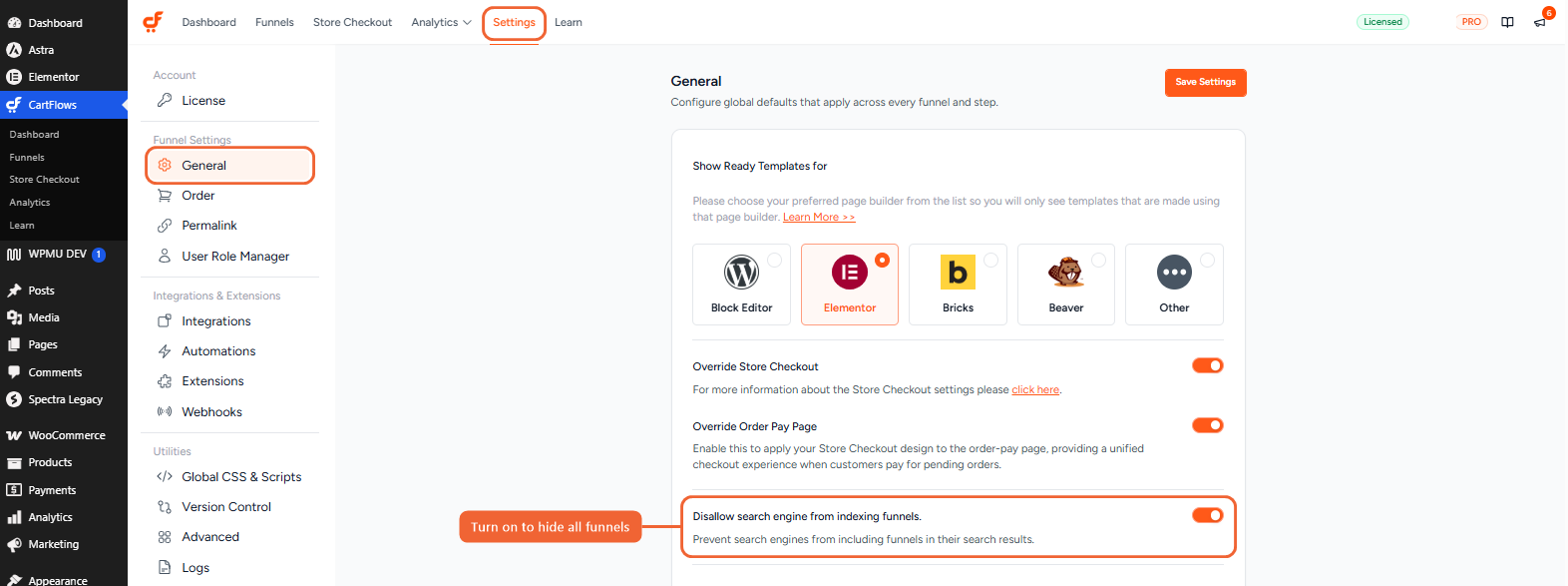
Step 4. Click Save Settings.
Every funnel on your site is now hidden from search engines, unless a funnel has its own setting.
How to Hide or Show a Single Funnel
Use this when you want one funnel to behave differently from the rest. For example, you can keep all funnels hidden but let one lead-generation landing page appear in search results.
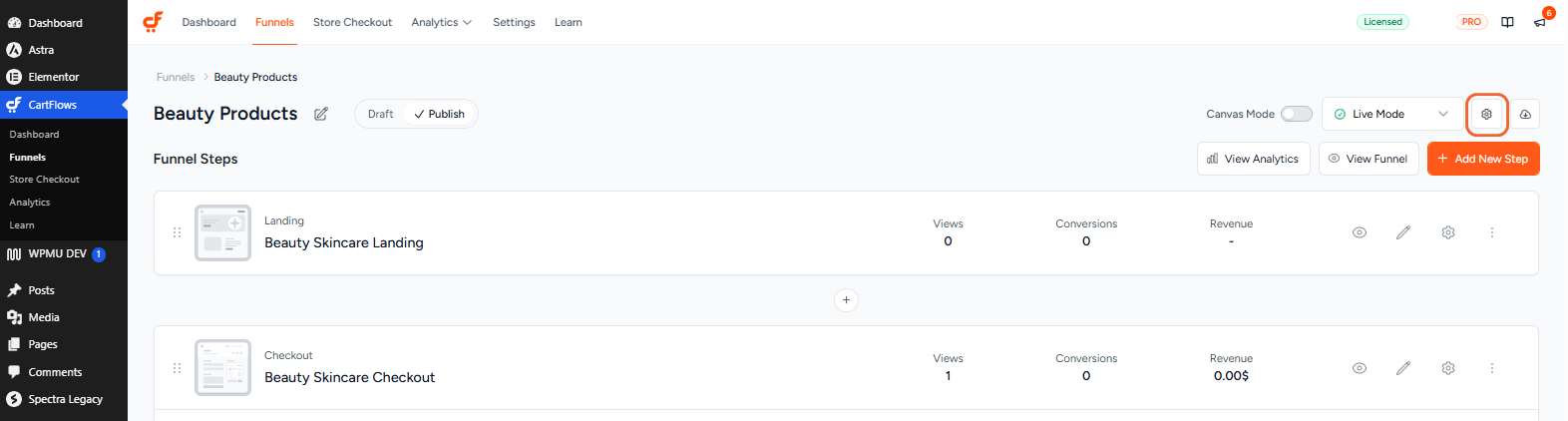
Step 1. Go to CartFlows → Funnels and open the funnel you want to change.
Step 2. Click the gear icon at the top right of the funnel to open Funnel Settings.
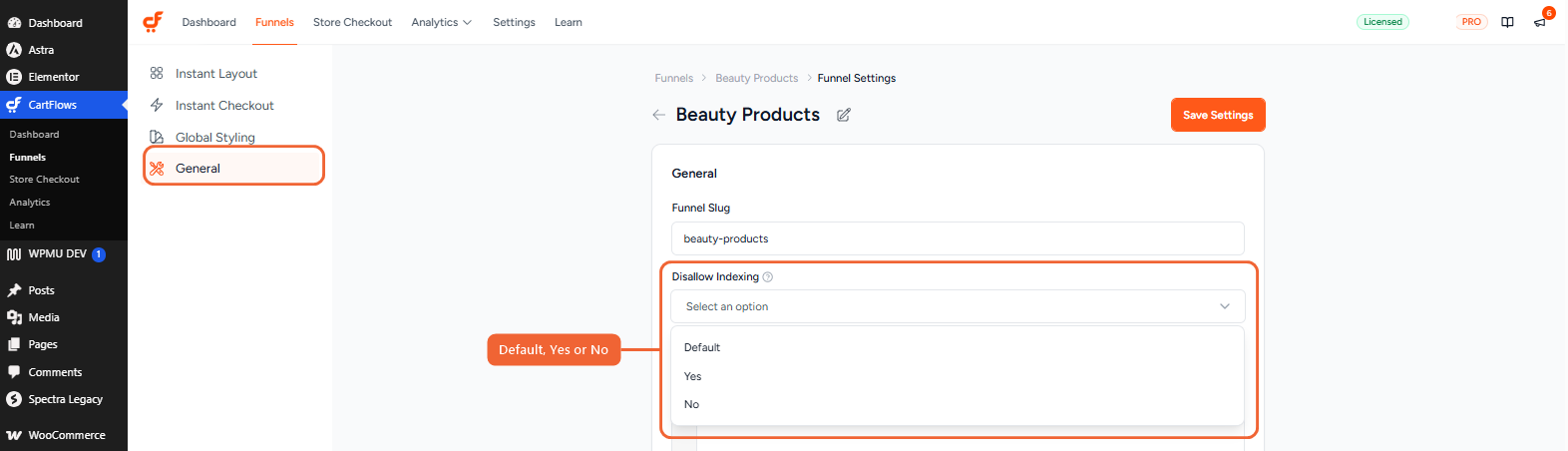
Step 3. Open the General tab.
Step 4. In the Disallow Indexing dropdown, choose one of the options:
- Default — The funnel follows the site-wide setting.
- Yes — The funnel is always hidden from search engines.
- No — Search engines can always list the funnel.
Step 5. Click Save Settings.
The funnel now uses its own setting. To go back to the site-wide setting, choose Default and save.
The same steps work for your Store Checkout, since it is a funnel too.
How to Check That a Page Is Hidden
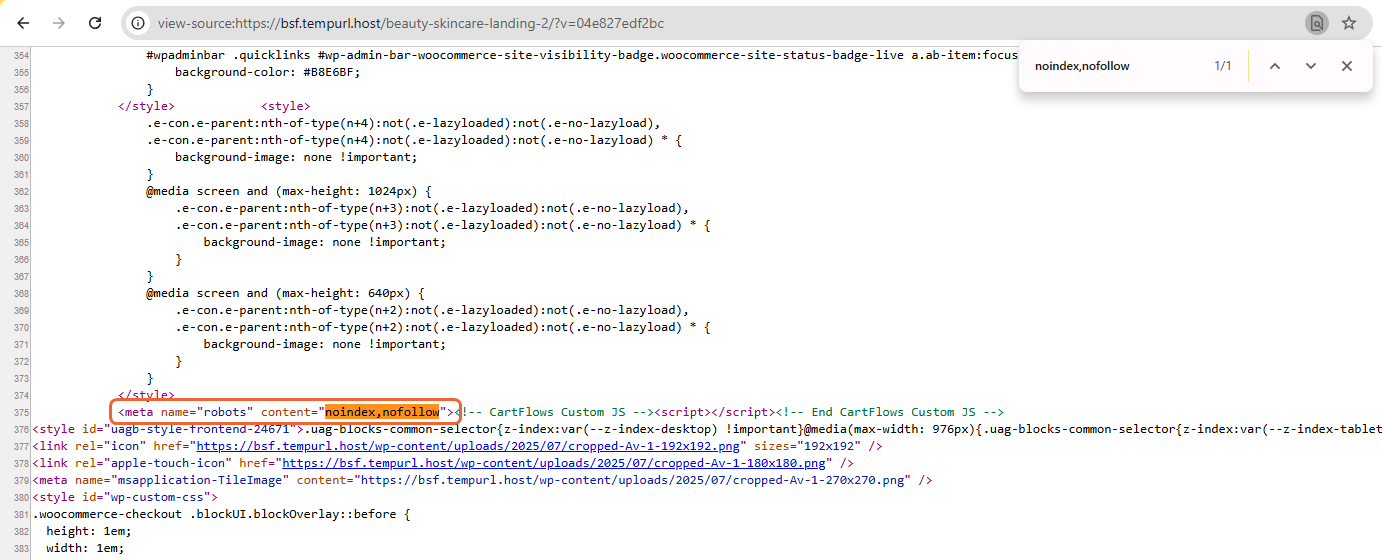
Step 1. Open any step of the funnel in your browser, for example its landing or checkout page.
Step 2. Right-click the page and choose View Page Source.
Step 3. Press Ctrl + F (or Cmd + F on a Mac) and search for noindex.
If the page is hidden, you will see a line that contains noindex,nofollow.
Frequently Asked Questions
We don't respond to the article feedback, we use it to improve our support content.