
- Hiding Fields on the Checkout Page
- Installing WooCommerce
- Using WooCommerce
- Adding Products in WooCommerce
- Using Your Theme's Header & Footer in a Step
- Embedding a Checkout Form on the Checkout Page
- Hiding WooCommerce Pages and Products
- Using Pricing Tables
- Adding an Affiliate Program
- Setting a Funnel as the Homepage
- Dynamic Offers aka Rule Engine
- Instant Layout for Checkout and Thank You Step
- Adding Products from the URL to the Checkout Page
- Setting Up Split Testing for Steps
- Deleting Plugin Data During Uninstallation
- Importing Ready-Made Templates for Funnels and Steps
- Importing and Exporting Funnels and Step
- URL Parameters
- Replacing the Main Checkout Order with an Upsell or Downsell
- Rolling back to a Previous Version
- Google Address Autocomplete
- Flatsome UX Builder
- ActiveCampaign
- Paypal Reference Transactions
- How PaypPal/Stripe Works
- Enabling Enfold Avia Layout Builder
- Setting Up Authorize.net for Upsell & Downsell
- Supported Payment Gateways
- Setting Quantity and Discount for Products on the Checkout Page
- Adding Custom Payment Gateway Support for One-Click Upsell and Downsell
- Creating Subscription Products with CartFlows
- Supported Multi-Currency Plugins
- Enabling/Disabling Shipping Fields and Ship to Different Address
- Enabling/Adding Coupons on the Checkout Page
- Displaying Account Creation Fields on the Checkout Page
- Setting Up Square Gateway for Upsell & Downsell
- CartFlows Elementor Widgets
- CartFlows Beaver Builder Modules
- CartFlows Block Editor Blocks
- Importing Divi Templates
- Bricks Builder
- OttoKit
- Connecting Stripe Payment Gateway
- LearnDash
- Facebook Pixel
- TikTok Pixel Tracking
- Google Ads Pixel
- Pinterest Pixel Tracking
- How to Enable Snapchat Pixel Tracking in CartFlows?
- Funnel in Test Mode
- Troubleshooting Plugin and Theme Conflicts
- Resolving the "Please Select a Simple, Virtual, and Free Product" Error
- Fixing Endless Loading on the Checkout Page
- Fixing the "We can't seem to find an order for you." Error on the Thank You Page
- Troubleshooting License Activation Issues
- Fixing the "Checkout ID Not Found" Error
- Fixing the "Session Expired" Error Message
- Resolving "Order Does Not Exist" Error on Upsell/Downsell Page
- Fixing the "Sorry, This Product Cannot Be Purchased" Error
- Disabling Auto-fill of Address Fields Based on Zip Code
- Enabling Theme's Scripts & Styles Without Changing Page Template
- Disabling Auto-fill of Checkout Fields
- Allowing Cache Plugins to Cache CartFlows Pages
- Changing the "Choose a Variation" Text
- VAT Field Not Displaying for WooCommerce EU/UK VAT Compliance Plugin
- Enabling the Product Tab on Store Checkout
- Displaying the Order Summary Open on Mobile Devices
- Refreshing the Checkout Page After CartFlows AJAX Calls
- Overview
- Installing Modern Cart Starter
- Installing Modern Cart Pro
- Activating License Key
- Customizing General Settings
- Customizing Cart Tray Labels
- Customizing Cart Icon Settings
- Customizing Cart Tray Styling
- Understanding the Product Recommendations Feature
- Controlling Product Recommendation Source for Empty Cart
OttoKit Integration in CartFlows
CartFlows now offers a seamless OttoKit integration, allowing WooCommerce store owners to automate tasks and enhance customer engagement. With this integration, you can set up workflows to track specific actions like opt-ins, upsell responses, or downsell interactions, all directly from your CartFlows dashboard. This helps with targeted marketing, CRM updates, and triggering emails based on user activity without the need to switch between different tools.
What is OttoKit?
OttoKit is an automation platform that connects multiple apps and simplifies workflows by triggering actions based on specific events.
How to Use OttoKit Integration
Step 1: Access Automation Menu
In your CartFlows dashboard, locate the new Automations menu.
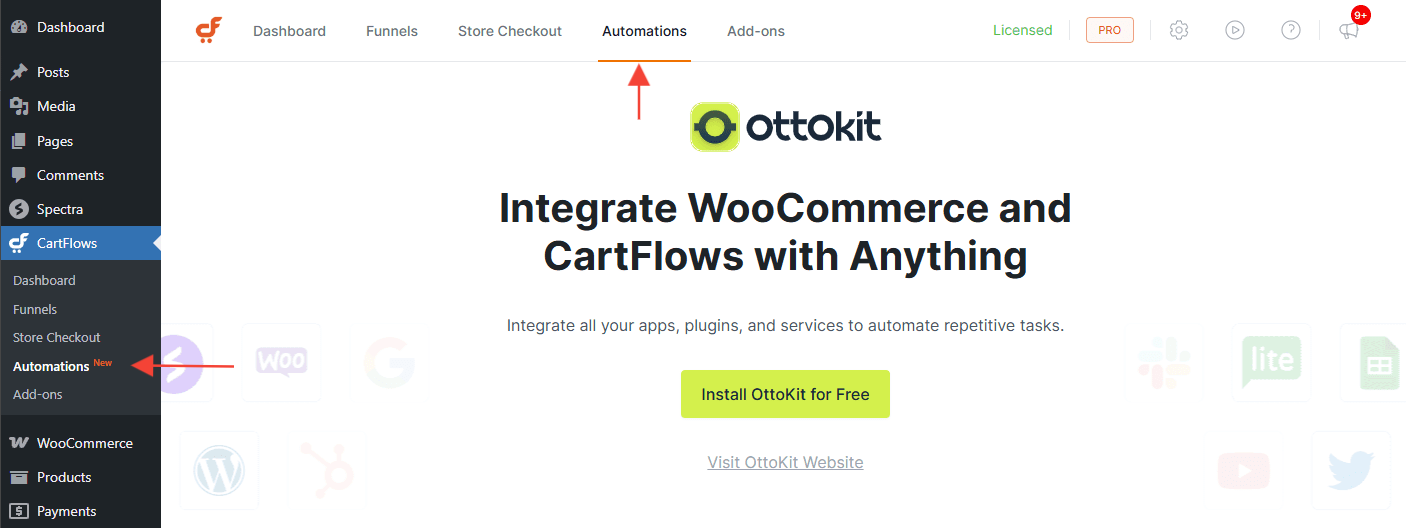
Step 2: Install or Access OttoKit
If OttoKit is not yet installed, you can do so from the Automations tab. If it’s already installed, click Create Workflow to start.
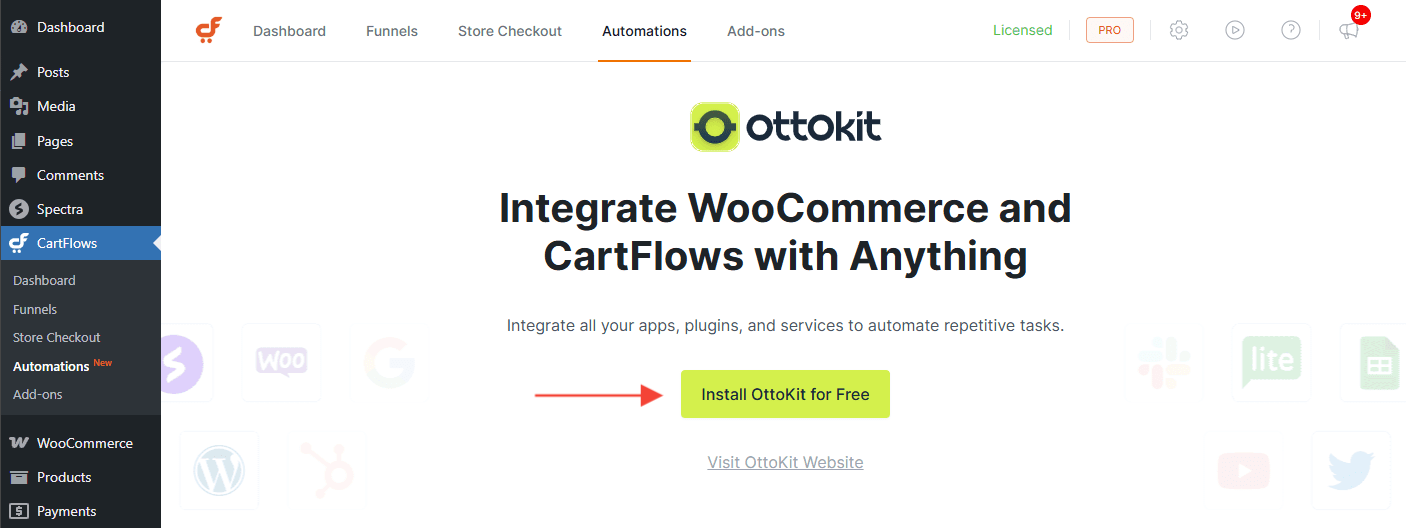
Step 3: Configure Workflow for Funnel Steps
To create workflows for specific funnel steps like Checkout, Upsell, or Downsell:
1: Open the funnel editor and select the step you want to automate.
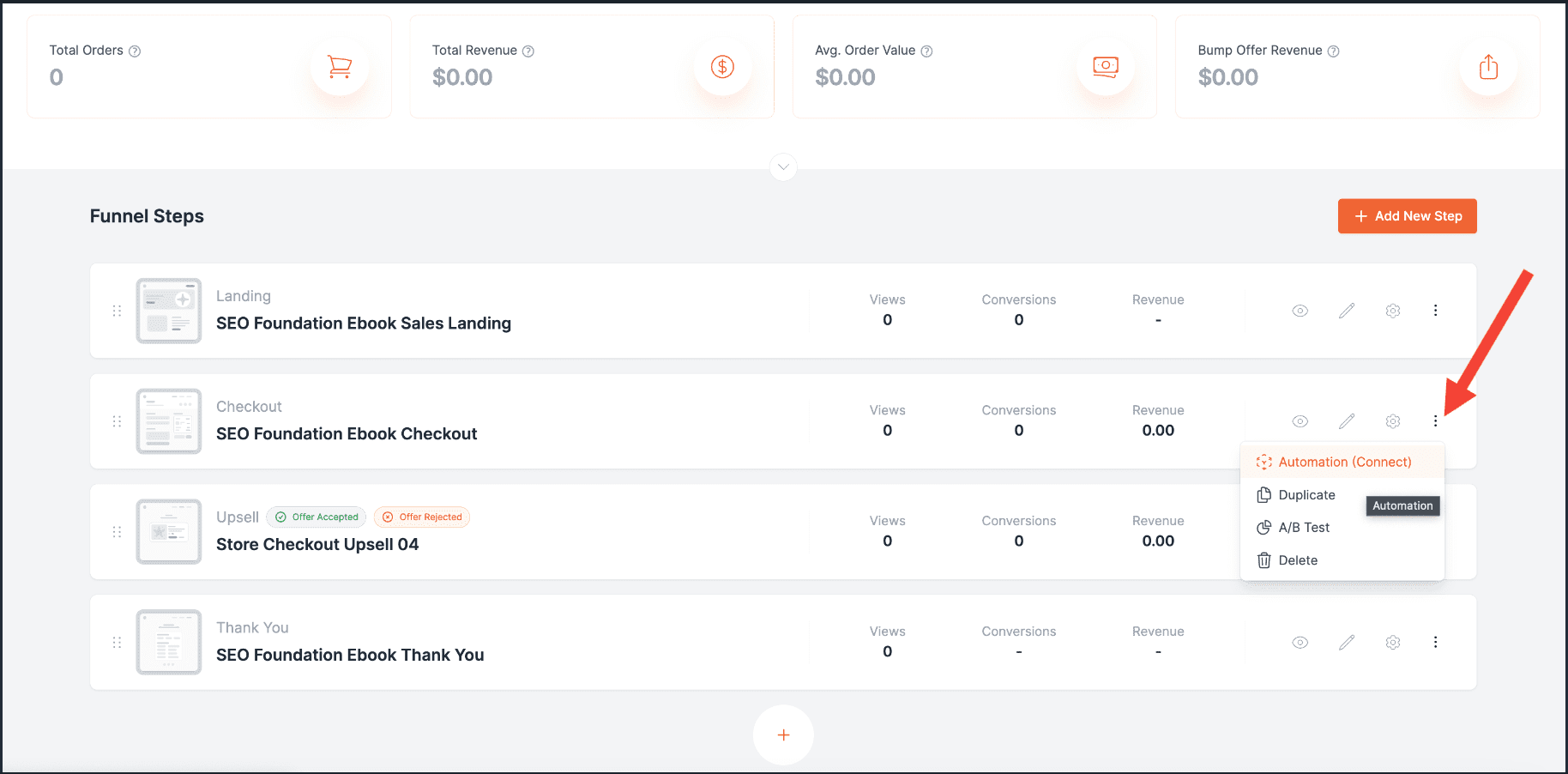
2: Click Automation to open the OttoKit window for that step.
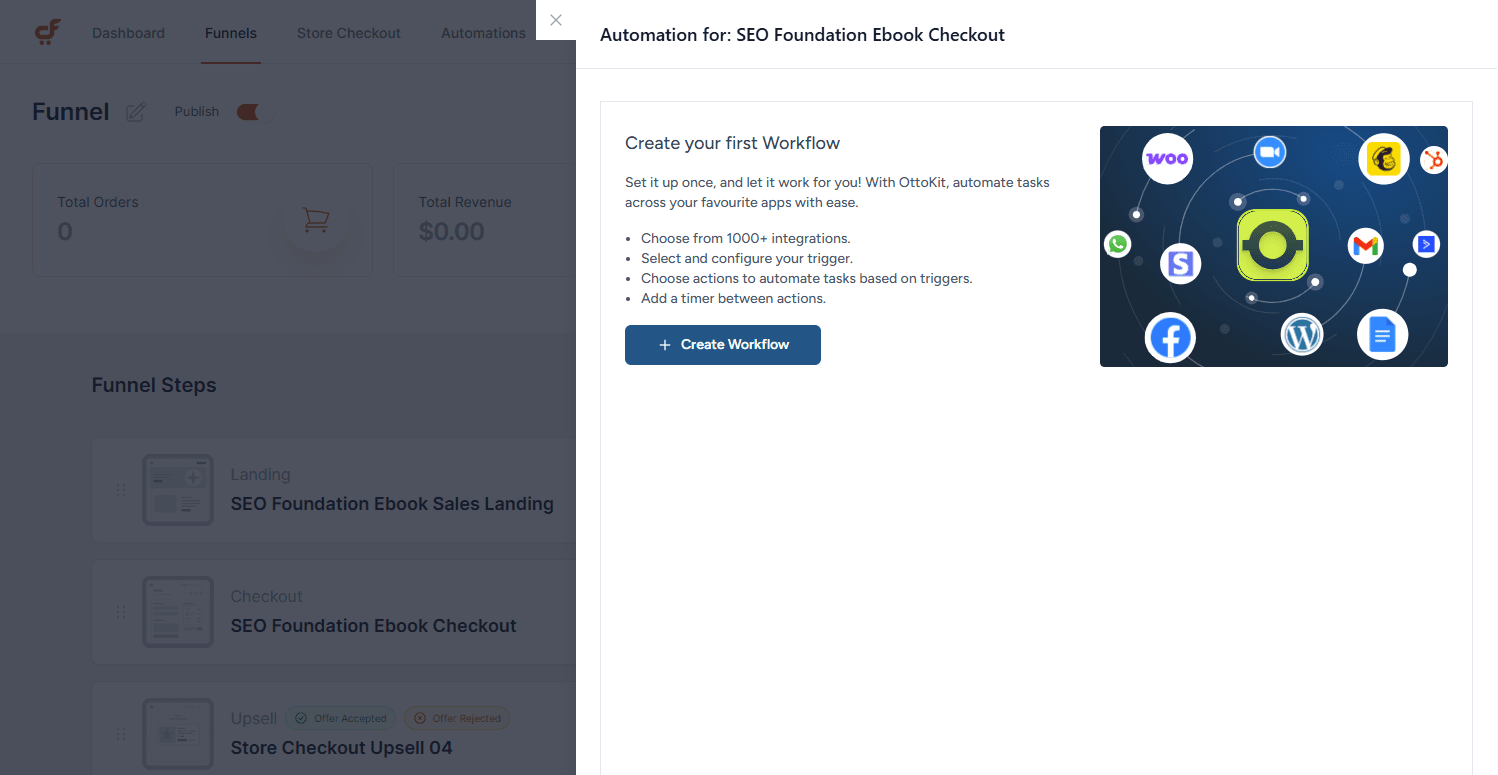
Pro Tip: Workflows created here will also appear in your OttoKit account. Any updates will sync automatically between CartFlows and OttoKit.
Example: Add Users Who Declined an Upsell to Google Sheets
1: In OttoKit, create a workflow using CartFlows as the app and select Upsell Declined as the trigger event.

2: Connect OttoKit to CartFlows. For guidance, refer to OttoKit WordPress Integration.

3: In the Configure tab, select your funnel and the upsell step.

4: Test the connection by clicking Fetch Data, then click Save.

5: Choose your action app—here, select Google Sheets.
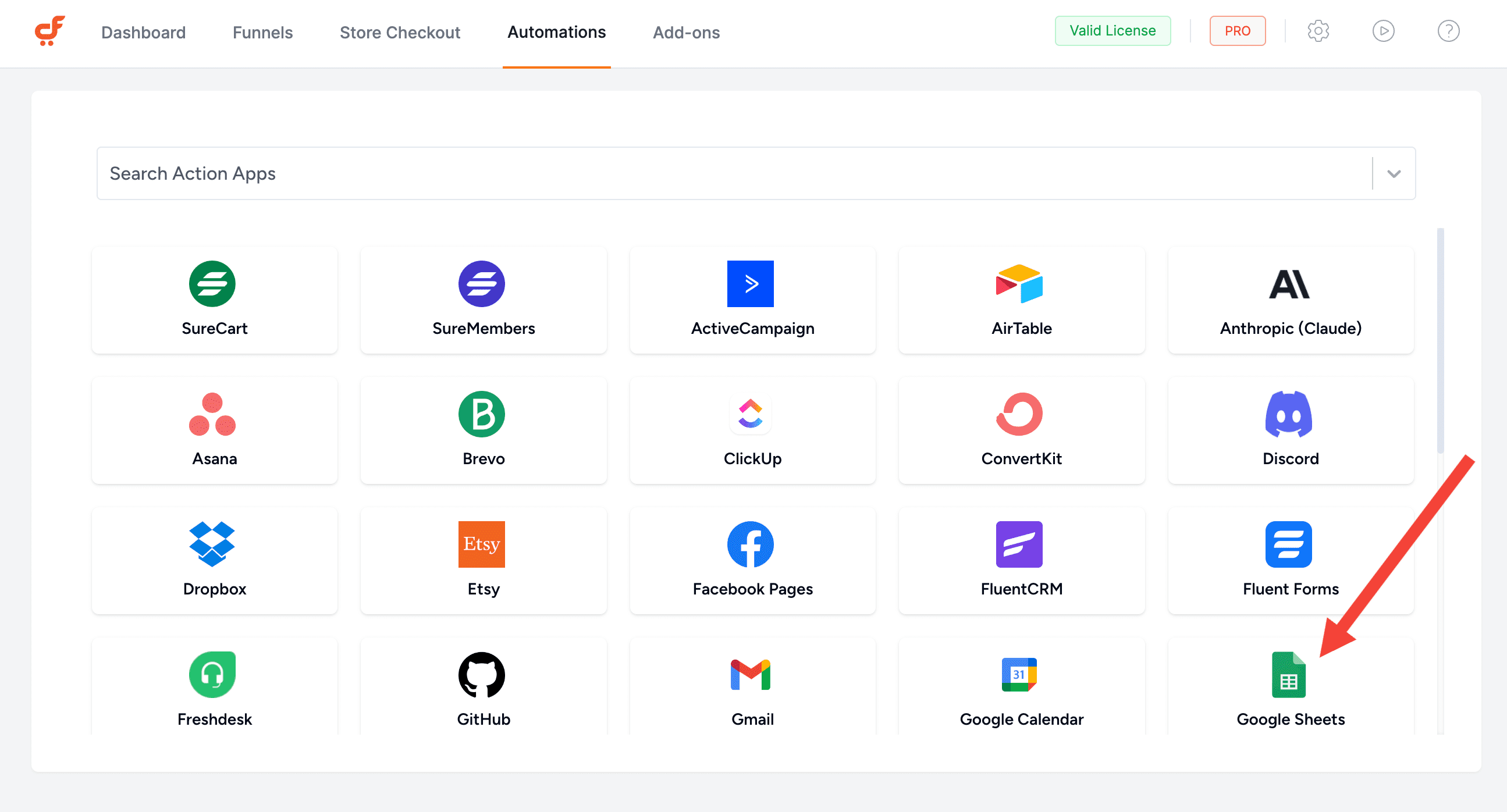
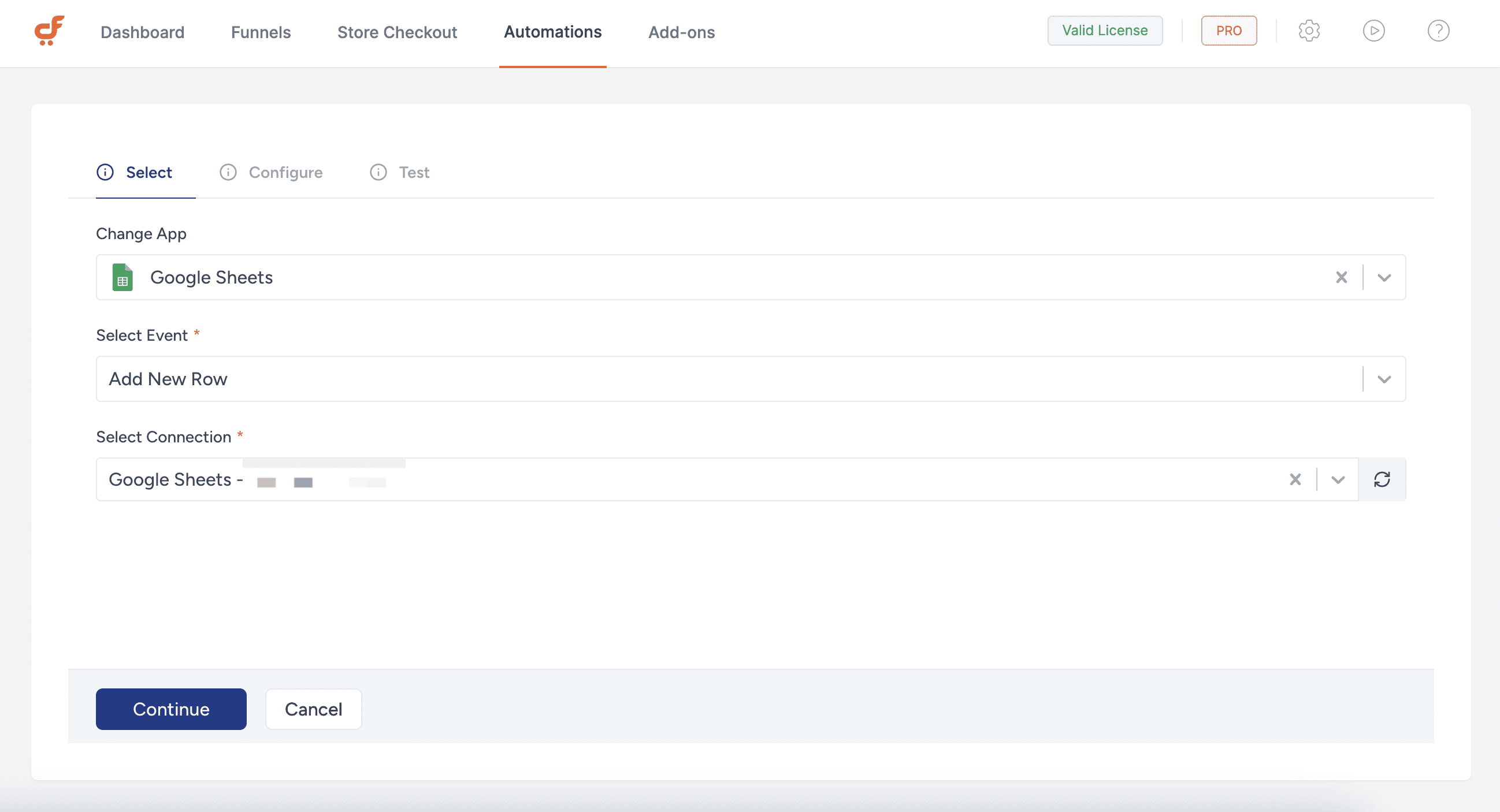
6: Connect Google Sheets, choose the action Add New Row, and select your spreadsheet and worksheet.

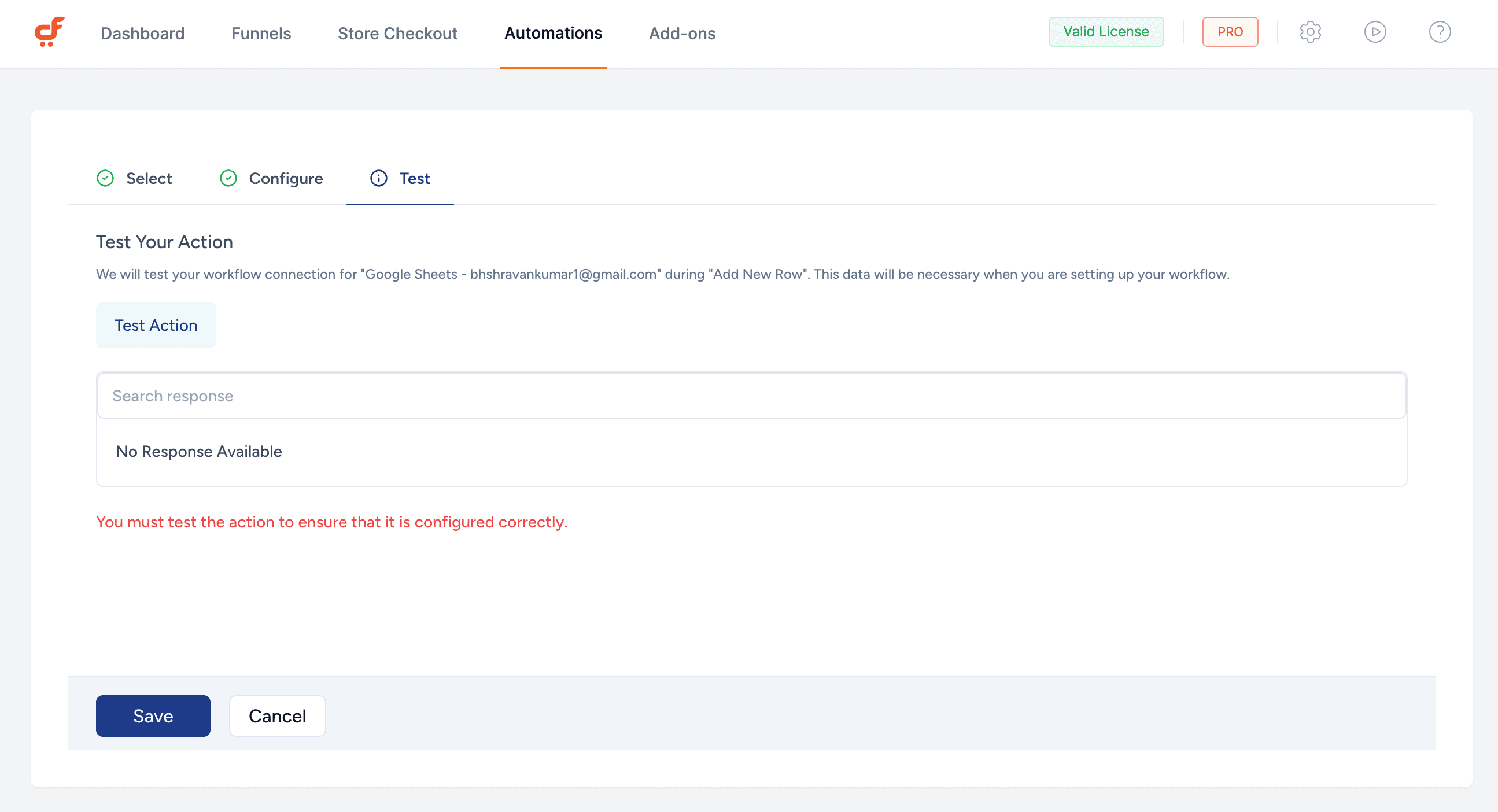
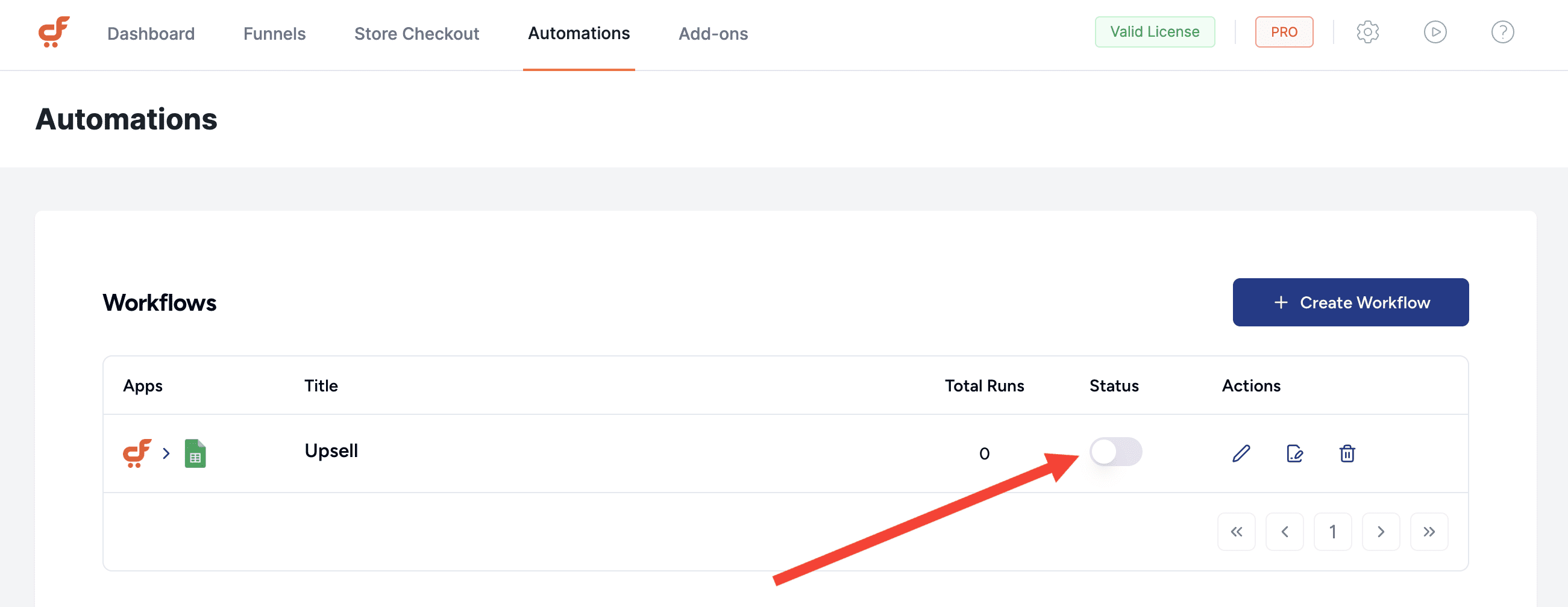
7: Test the connection using Test Action, then activate the workflow.
Now, each time a user declines the upsell, their information is automatically added to your Google Sheets.
We don't respond to the article feedback, we use it to improve our support content.