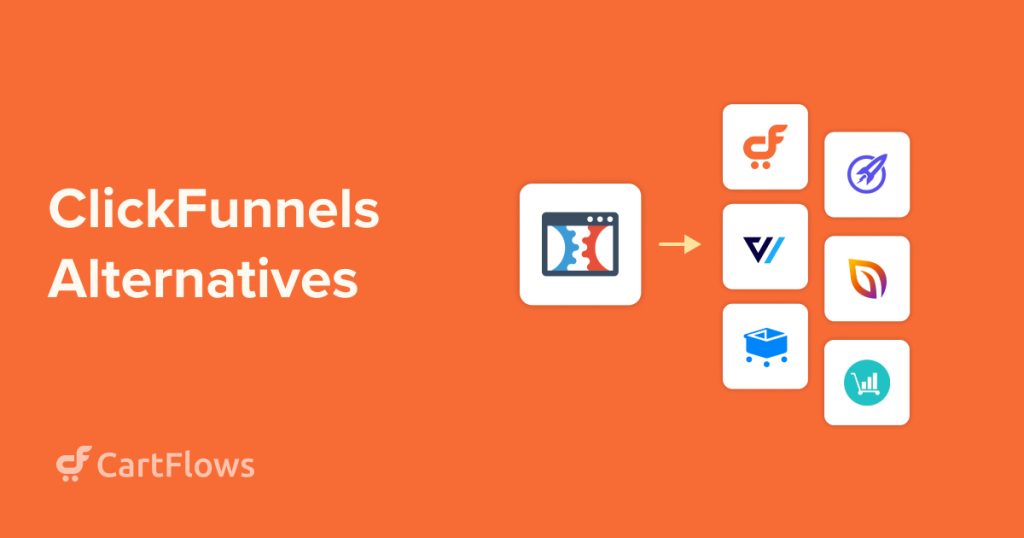
Paying $97 a month for a funnel builder feels like a lot, especially if you’re using WordPress and only half of ClickFunnels’ features actually matter to you.
The good news is the market has moved on. Several alternatives now offer similar funnel-building power and some come in under $10 a month.
We compared 10 of the best ClickFunnels alternatives based on price, funnel features, WooCommerce compatibility and ease of use.
Here’s what we found:
Quick Answer: Best ClickFunnels Alternatives in 2026
ClickFunnels alternatives are funnel builders that handle the same core jobs, like landing pages, checkout flows, upsells and automations, but they differ in price, flexibility and how well they fit your setup.
The right choice depends less on features on paper and more on what you’re actually building.
A WooCommerce store owner has very different needs compared to someone selling a single course or digital product.
Here’s how the main options stack up:
- CartFlows: Best for WooCommerce funnels that feel native to WordPress
- FunnelKit: Best for WooCommerce funnels with deeper automation and email follow-up built in
- Systeme.io: Best free all-in-one funnel tool for beginners who want everything in one place
- Kartra: Best for replacing multiple tools with one system for funnels, email, and automation
- Kajabi: Best for creators building courses, memberships, and recurring content businesses
- SamCart: Best for high-converting checkout pages and simple product funnels
- ThriveCart: Best for lifetime deal buyers focused on checkout and affiliate management
- OptimizePress: Best for WordPress landing pages and simple lead generation funnels
- SeedProd: Best for fast, lightweight WordPress landing pages at a low yearly cost
- Builderall: Best for users who want an all-in-one toolbox with maximum features per dollar
Quick Comparison: 10 Best ClickFunnels Alternatives
CartFlows, FunnelKit and OptimizePress are the only ones that work inside WordPress.
Everything else requires a separate hosted platform, which means a different URL, a separate login and data you don’t fully own.
| Tool | Starting Price | Free Plan | Platform | Woo-Native | Best For |
|---|---|---|---|---|---|
| CartFlows | Free / $189/year | Yes | WordPress plugin | Yes | WooCommerce stores |
| Systeme.io | $0/month | Yes | SaaS | No | Beginners, solopreneurs |
| FunnelKit | $99.50/year | No | WordPress plugin | Yes | WooCommerce + automation |
| Kartra | $59/month | No | SaaS | No | Email, automation, funnels |
| Kajabi | $143/month* | No | SaaS | No | Courses and memberships |
| SamCart | $79/month | No | SaaS | No | Checkout-first, digital products |
| ThriveCart | $495 one-time | No | SaaS | No | Affiliates, lifetime pricing |
| OptimizePress | $99/year | No | WordPress plugin | Yes | Landing pages, lead gen |
| SeedProd | $39/year | No | WordPress plugin | Partial | Simple funnels, beginners |
| Builderall | $47/month | No | SaaS | No | Budget all-in-one |
*Kajabi billed annually. Monthly billing starts at $179/month. **CartFlows free plan available. Paid plans start at $189/year (renews at $249/year).
Prices as of April 2026. Always verify on each tool’s pricing page before buying.
How We Evaluated The ClickFunnels Alternatives
Not every funnel builder works for every business. A solo course creator has different needs than a WooCommerce store running upsells and order bumps.
Rather than ranking tools by popularity, we judged each one against five criteria.
- Pricing and total cost of ownership. Monthly price is only part of the picture. We looked at what you actually pay once you factor in plan limits, transaction fees and tools you’d need alongside it. A few options get expensive fast once you grow past the entry tier.
- Funnel features. Upsells, order bumps, A/B testing, checkout customization are the core jobs a funnel builder needs to handle. We noted which tools do these natively and which require addons or workarounds.
- eCommerce and WooCommerce compatibility. If you use WooCommerce, a hosted SaaS funnel builder can involve a separate platform, separate data and limited payment options. We flagged which tools live inside WordPress and which pull you out of it.
- Ease of use. A tool your team can’t use confidently isn’t saving you anything. We looked at setup complexity and learning curve and whether being sold as “beginner-friendly” actually holds up in practice.
- Integrations and reliability. Does it connect with your email tool, CRM and payment processor without Zapier holding everything together? We also considered the company track record. A funnel builder that gets acquired or shut down mid-year is a real risk.
Detailed Reviews: Best ClickFunnels Alternatives for 2026
1. CartFlows: Best ClickFunnels Alternative for WordPress and WooCommerce
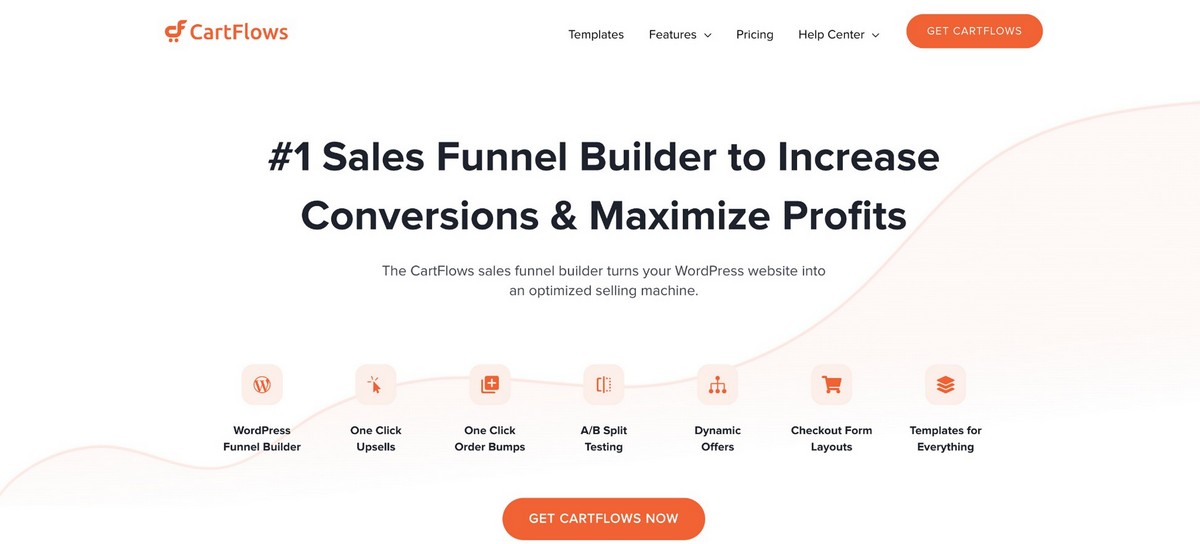
If you run a WooCommerce store, CartFlows is where you should start. For most stores, it is also where you should stop looking.
It’s a WordPress plugin, not a separate platform. Your funnels live inside your own site. You keep your domain, your hosting, your data and your page builder. You don’t need to migrate anything.
ClickFunnels charges $97/month to host your funnels on their servers. CartFlows has a free plan to start, and paid plans from $189/year. That’s more than $900 in savings in the first year alone.
Over 223,000 store owners use CartFlows. It’s the most installed funnel plugin in the WordPress ecosystem, which matters when you are looking for documentation, community answers and developer familiarity.
What it does well
- One-click upsells and order bumps – Post-purchase upsells and checkout addons run natively inside WooCommerce. You don’t need a third-party integration or a second platform login.
- Custom checkout layouts – The default WooCommerce checkout is not built to convert. CartFlows replaces it with layouts that are, and they work with Elementor, Divi, Bricks and Gutenberg.
- A/B split testing – Available with the Pro plan ($299/year). Most tools charge significantly more for this feature. CartFlows includes it natively and setting it up takes a few clicks.
- Dynamic offers – Show different offers based on what’s in the cart or what the customer has already bought. Useful once your store has enough volume to segment.
- Lead generation funnels – Build opt-in flows and email capture sequences, not just product sales funnels.
- Funnel analytics – See conversion rates at every step. Know where people drop off without adding another tool to the stack.
Pricing
- Free plan: Funnel builder, basic checkout layouts, lead gen pages. No credit card required.
- CartFlows Plus: $189/year today, renews at $249/year. Up to 10 sites. Includes upsells, order bumps, Modern Cart, and Cart Abandonment Pro.
- CartFlows Pro: $299/year today, renews at $449/year. Up to 30 sites. Everything in Plus, plus A/B split testing and funnel analytics.
- Lifetime deal: $699 one-time (Plus, 10 sites) or $999 one-time (Pro, 30 sites). No recurring fees, ever.
The math is straightforward: $189/year versus $97/month for ClickFunnels. Over 12 months, that’s more than $900 saved.
What to keep in mind
- You need WordPress and WooCommerce. If you already use them, this is not a constraint. If you don’t, CartFlows is not the right tool.
- You’ll need the Plus plan for upsells and dynamic offers. A/B testing and funnel analytics require the Pro plan. Most stores start free and upgrade when they need those features.
- You manage your own hosting. For most WooCommerce store owners, this is a given, not an extra burden.
CartFlows vs ClickFunnels
ClickFunnels is a standalone SaaS platform. Your funnels live on their servers, not your site.
CartFlows runs on WordPress, so everything stays in one place, under your full control.
On price, $189/year works out to under $16/month against ClickFunnels’ $97/month entry plan. ClickFunnels handles hosting for you, which matters if you’re not using WordPress.
If you use WordPress, the case for paying $97/month elsewhere gets thin fast.
The free plan takes under ten minutes to set up. No credit card required.
2. FunnelKit: Best for WooCommerce Stores That Need Built-In Automation
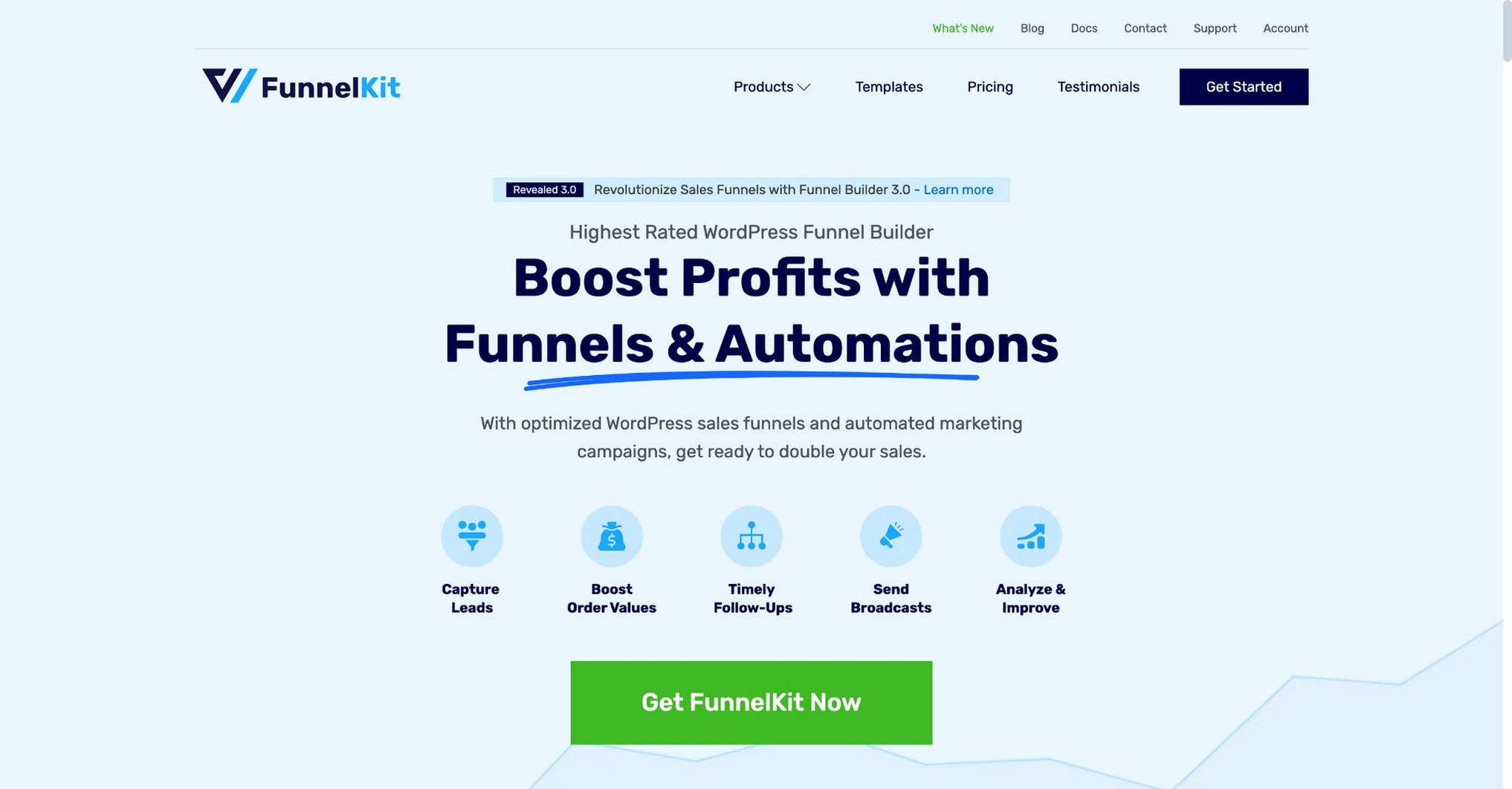
FunnelKit is used by over 39,000 WooCommerce stores and is the most feature-complete WordPress funnel plugin available.
Where CartFlows focuses on checkout optimization, FunnelKit bundles a full marketing automation engine with email sequences, CRM, customer segmentation and cart abandonment recovery.
If you want one plugin to handle funnels and your post-purchase marketing without stitching together separate tools, FunnelKit is the most complete WordPress option here.
It starts at $99.50/year, but the entry plan is limited enough that most stores will end up paying more.
For example, automation, the feature that makes FunnelKit distinct, is locked behind the Professional plan at $399/year.
What it does well
- Full funnel stack – Custom checkouts, order bumps, one-click upsells and downsells, A/B testing. Nothing outsourced to addons.
- Built-in automation – Email sequences, SMS broadcasts, behavioral triggers, cart abandonment recovery. No Zapier chain holding it together.
- CRM – Contact profiles with purchase history, email engagement, and average order value. Starts paying off once your customer list grows.
- Revenue analytics – Conversion rates per funnel step, cart recovery tracking, revenue per sequence. More granular than most tools at this price.
- Page builder support – Elementor, Divi, Gutenberg, Oxygen. Works with whatever you’re already using.
What to keep in mind
- Automation is only available with the Professional plan at $399/year for two sites. If that’s the main reason you’re looking at FunnelKit, the real starting price isn’t $99.50.
- Introductory pricing applies on first purchase. Renewal rates are higher, so it’s worth checking before you commit.
- Steeper setup than CartFlows, especially for automation workflows. Not a dealbreaker, but not plug and play either.
- No free plan. There’s a 14-day refund window, but you can’t test it without paying first.
FunnelKit vs ClickFunnels
Both cover upsells, order bumps and funnel sequences, but the architecture is completely different.
ClickFunnels is hosted SaaS, meaning your funnels live on their servers. FunnelKit runs on WordPress, so your data stays on your own site.
Entry pricing isn’t even close. It’s $99.50/year for FunnelKit versus $97/month for ClickFunnels.
The real tradeoff is that FunnelKit requires WordPress and WooCommerce. If you’re already there, that’s not a constraint. It’s just how the tool works.
3. Systeme.io: Best Free ClickFunnels Alternative for Beginners
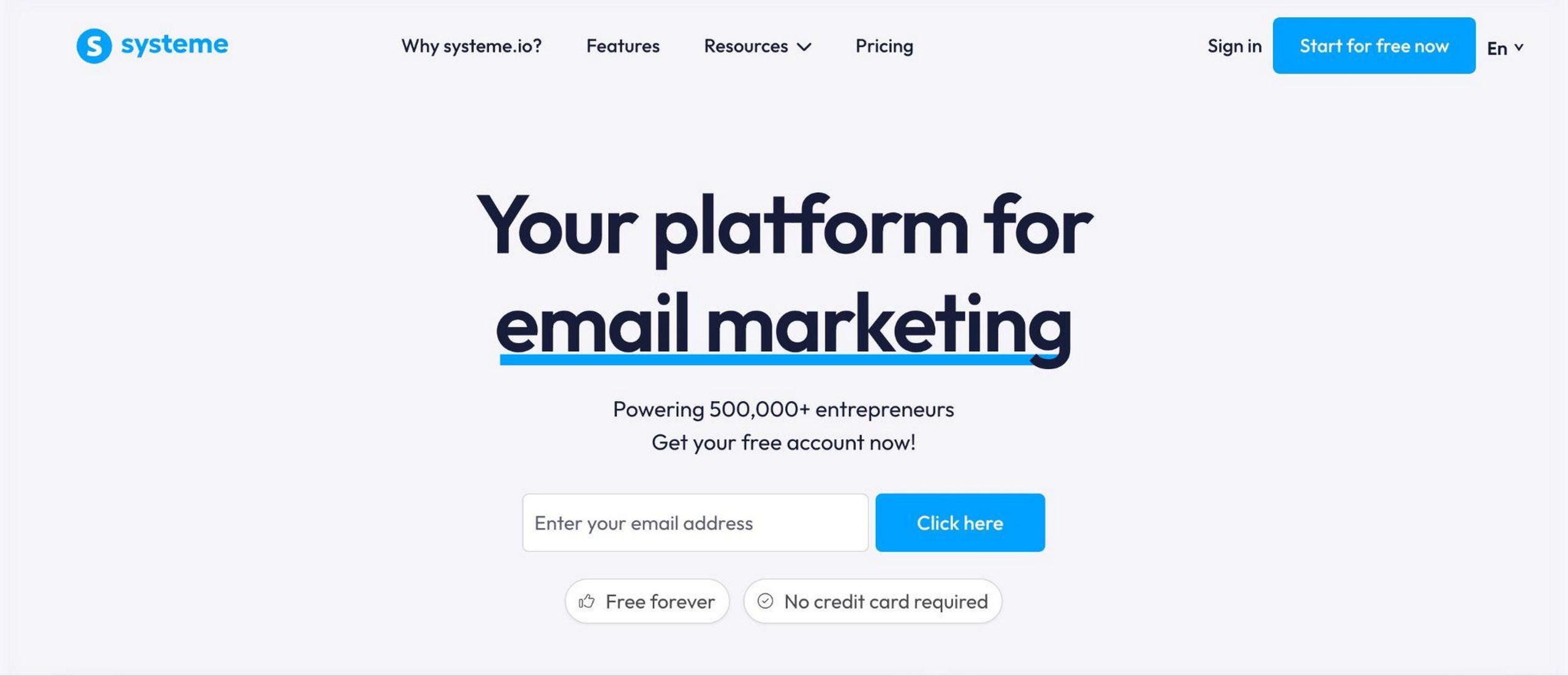
Systeme.io is a hosted SaaS platform covering sales funnels, email marketing, course hosting and basic automation, all in one dashboard.
The free plan includes 3 sales funnels, 2,000 contacts, email campaigns and 0% transaction fees, with no credit card required.
For someone testing funnel building before spending anything, Systeme.io is a reasonable place to start.
Paid plans start at $17/month, going up to $97/month for the Unlimited tier. That’s cheaper than ClickFunnels at every level. That’s the pitch and it mostly holds up.
Build something simple, stay cheap. Push the platform and you’ll feel it.
What it does well
- Genuinely free plan – Not a trial, not a 14-day window. You can build funnels, collect contacts and sell products indefinitely without paying anything.
- All-in-one at low cost – Funnels, email marketing, course hosting and an affiliate program under one login. Useful if you’re currently paying for three separate tools to do the same jobs.
- No transaction fees on any plan – Including free. That’s pretty good at this price point.
- Simple setup – Designed for non-technical users. Funnels can be published in under an hour without touching code.
- Unlimited emails – Plans limit your contacts, not your sends so you won’t hit an email volume wall.
What to keep in mind
- Pages load slowly on both mobile and desktop. For a tool built around conversions, that’s a real problem.
- Design customization is limited. You can’t change layouts much beyond the provided templates, which makes matching a specific brand style difficult.
- A/B testing is too basic for serious conversion work. If testing matters to you, look at CartFlows or FunnelKit instead.
- It’s a closed SaaS platform. Your data lives on Systeme.io’s servers. If you already use WooCommerce, this duplicates your stack rather than simplifying it.
- Professional branding requires the $97/month plan, a steep jump from $17/month or free.
Systeme.io vs ClickFunnels
Both are hosted SaaS platforms so you’re dealing with similar data ownership constraints.
The price gap is significant: ClickFunnels starts at around $97/month; Systeme.io’s paid plans start at $17/month and the free plan covers what most beginners actually need.
ClickFunnels has more polished templates and more advanced funnel logic. Systeme.io wins on cost and ease of entry.
If you’re not using WordPress and you’re still figuring out whether funnels are even the right move for your business, try the free plan first.
4. Kartra: Best All-in-One ClickFunnels Alternative With Built-In Email and Automation
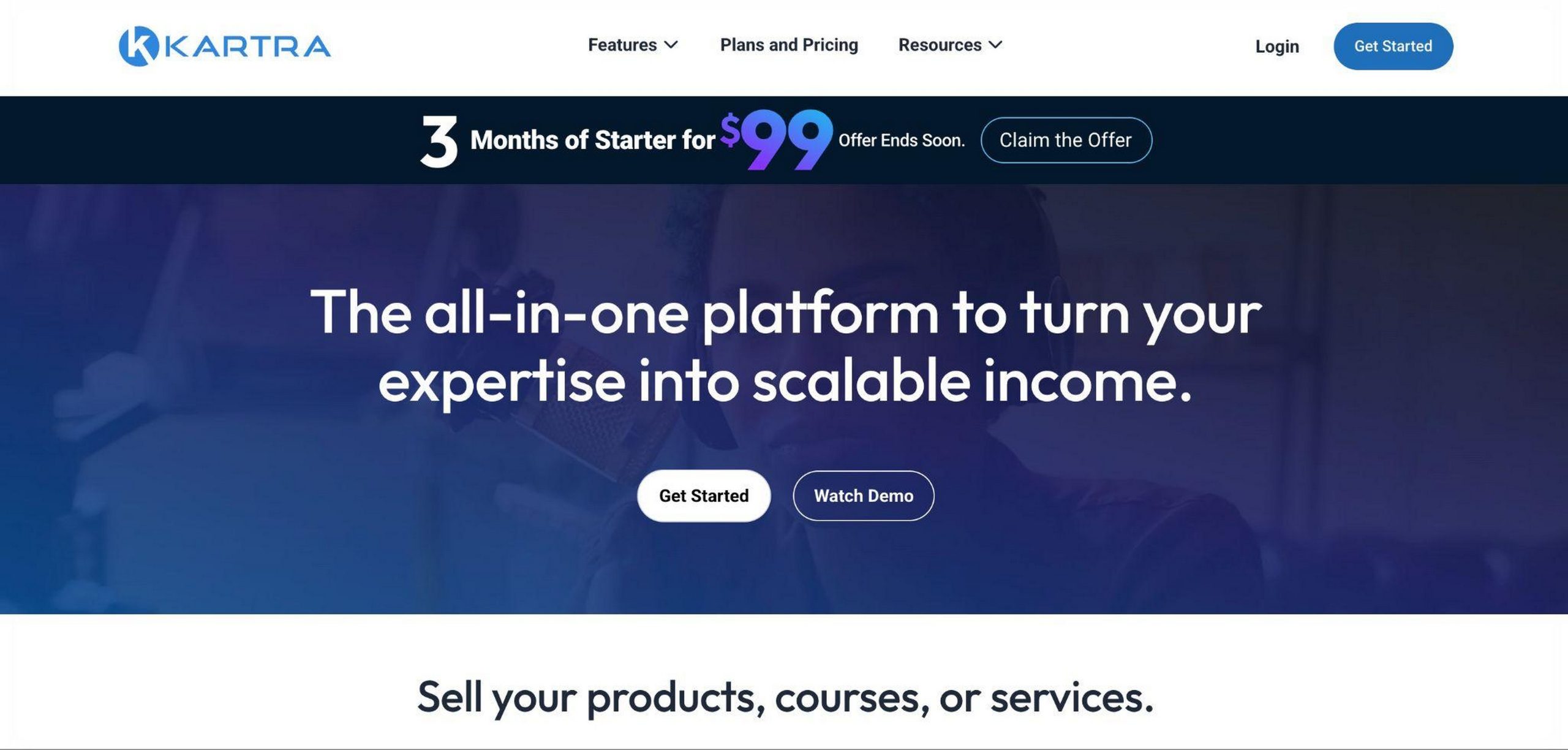
Kartra is a hosted SaaS platform that puts funnel building, email marketing, video hosting, a helpdesk, calendar scheduling, affiliate management and course hosting into one dashboard.
No WordPress required, no plugin stack to manage.
If you run a coaching, consulting, or digital product business and want to cut four or five separate tool subscriptions down to one, Kartra is the most complete option for that.
Plans start at $59/month, but the Essentials tier charges a 5% transaction fee on every sale. Most businesses skip straight to the Starter at $119/month to avoid it.
What it does well
- Full marketing stack in one place – Funnels, email sequences, SMS, behavioral automation and affiliate management, all without a Zapier chain holding things together.
- Video hosting – Stream directly from Kartra without a separate Vimeo or Wistia account, cutting one more tool from the bill if video is part of your delivery.
- Helpdesk and calendar – Built-in support ticketing and appointment booking. Not many funnel tools include either at any price.
- Funnel simulation – Map your entire funnel flow visually before building it. Useful for catching dead ends before they cost you conversions.
- Affiliate management – Track and pay affiliates natively. No FirstPromoter or Tapfiliate needed.
What to keep in mind
- The Essentials plan looks affordable at $59/month until you read the details: 500 contacts, 5 pages, 1 product, and a 5% transaction cut on every sale. For most businesses, the real entry point is $119/month.
- Pricing scales with your contact list, not just features. As you grow, you move up the tiers. Budget for where you’ll be in 12 months, not where you are today.
- No free plan. There’s a $1 trial for 14 days, then a 30-day money-back window if it’s not a fit.
- The platform has a real learning curve. Setup and reporting take time to figure out, especially early on.
- Not WooCommerce-native. If you’re on WordPress, Kartra sits completely outside that stack.
Kartra vs ClickFunnels
Both are hosted SaaS platforms built around funnel-led selling where the main difference is scope.
ClickFunnels focuses on funnels and pages. Kartra adds email, video hosting, a helpdesk and affiliate management.
On price they’re in similar territory once you move past Kartra’s entry plan: $119/month for Kartra versus $97 to $147/month for ClickFunnels depending on the plan.
ClickFunnels has a bigger user community and more third-party integrations. Kartra’s use case is consolidation, with fewer tools to manage, one bill, one support team.
If that matters to your business, Kartra is worth a serious look.
5. Kajabi: Best ClickFunnels Alternative for Course Creators and Membership Sites
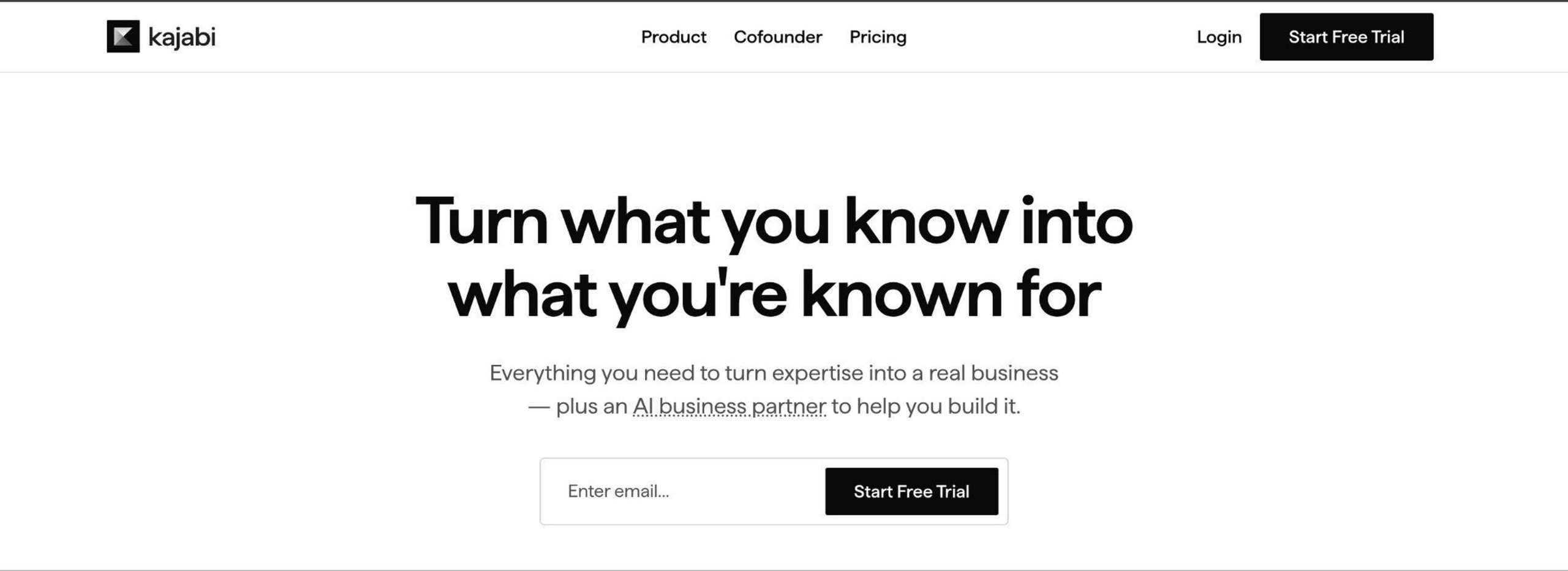
Kajabi is a hosted SaaS platform built for creators, coaches and consultants selling knowledge-based products.
It covers courses, memberships, communities, email marketing, funnels and a website builder in one place.
If your product is something you teach or coach rather than something you ship, Kajabi is built for that. ClickFunnels is not.
Kajabi overhauled its pricing in January 2026, its first major restructure in nearly a decade and the backlash in creator communities was significant.
Plans now start at $179/month ($143/month billed annually) for the Basic plan and go up to $499/month for Pro. There is no free plan.
The restructure also introduced additional processing fees when using third-party payment processors like Stripe.
What it does well
- Course and membership delivery – Polished student experience, drip content, cohort courses and a unified mobile app for courses, coaching, and community. This is where Kajabi genuinely leads the market.
- All-in-one for creators – Courses, email, funnels, community and a website under one login. No separate tools for ConvertKit, Teachable, or Circle if you’re currently using them.
- Visual automation builder – Branching logic, behavior triggers and pre-built templates. More accessible than Kartra’s automation setup for non-technical users.
- Redesigned checkout – Early adopters reported conversion lifts of up to 68% with the 2026 checkout redesign.
- Built-in analytics – Revenue reporting, funnel performance and email engagement one dashboard.
What to keep in mind
- At $179/month minimum with no free plan, Kajabi is the most expensive option in this list. If you’re still validating your first course, the price is hard to justify before making consistent revenue.
- Affiliates, advanced automations and cohort courses are locked behind higher tiers. The Basic plan at $143/month (annual) does not include them.
- Kajabi Payments adds a 0.7% surcharge on subscription and payment plan transactions, on top of card processing fees. For a membership business running recurring payments, that adds up.
- Not built for physical product eCommerce. If you sell through WooCommerce, Kajabi duplicates rather than extends your stack.
- The January 2026 pricing changes generated real backlash. It’s worth reading recent user feedback before committing.
Kajabi vs ClickFunnels
ClickFunnels is a general-purpose funnel builder. Kajabi is built specifically around selling knowledge and expertise.
ClickFunnels handles product funnels well but has no native course delivery, community features, or student experience to speak of.
Kajabi handles all of that but isn’t a strong fit for physical product stores or WooCommerce-based businesses.
On price, Kajabi at $143/month (annual) and ClickFunnels at $97/month (entry) are in a similar range.
Kajabi is the better tool when your business model centers on courses, coaching, or memberships. For everything else, it’s probably more platform than you need.
6. SamCart: Best for Checkout-First Funnels and Digital Products
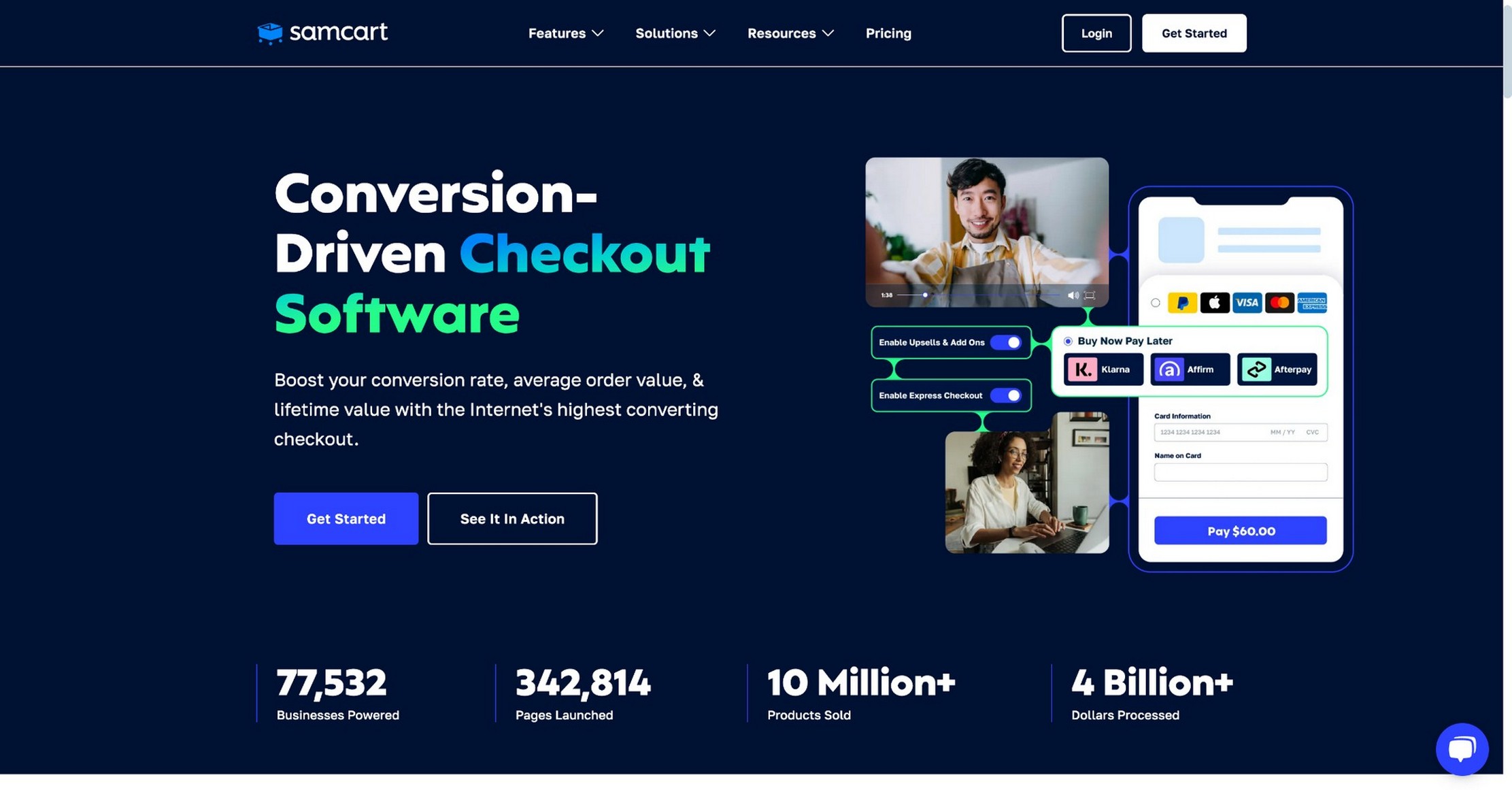
SamCart does one thing and stays focused on doing it well, the checkout experience.
No page builder, no CRM, no automation engine competing for attention in the dashboard.
You get high-converting checkout pages, one-click upsells, order bumps, subscription management and a surprisingly capable course delivery system, built specifically around getting people through payment as smoothly as possible.
SamCart also overhauled its pricing model in 2026. There’s now one plan starting at $79/month, and it includes every feature SamCart offers with no gating.
Your price scales with revenue as your business grows, not with the features you need.
There are no transaction fees beyond standard payment processor rates, which is a good thing.
What it does well
- Checkout page design – Pre-built templates designed to convert, not just look presentable. Embedded checkout, express checkout, one-click payment options and Pay What You Want are all included.
- One-click upsells and order bumps – Included at the base plan level. No upgrade required to access core revenue tools.
- A/B testing and affiliate management – Both included from $79/month. Previously locked behind a $319/month tier, now available to every user.
- Subscription management – Payment plans, recurring billing, free and paid trials. SamCart handles the operational side of recurring revenue cleanly.
- Zero transaction fees – You pay Stripe or PayPal their standard processing rate and nothing else on top.
- Course and digital product delivery – Video hosting, drip content, quizzes and downloads included. Not as fully featured as Kajabi, but functional enough for most digital product sellers.
What to keep in mind
- It’s not a full funnel builder. There is no landing page builder, no email marketing and no built-in traffic source. You bring customers to SamCart and it handles what happens after they arrive.
- No free plan. The 7-day trial gives you access, but it is a short window for evaluating it properly.
- Revenue-based pricing means your monthly cost increases as your sales grow. For high-volume sellers this is worth modeling before committing.
- Not WooCommerce-compatible. If your store runs on WordPress, SamCart sits outside your stack entirely.
SamCart vs ClickFunnels
ClickFunnels is a full funnel builder with checkout as one feature among many. SamCart is a checkout platform with a narrow, well-executed focus.
ClickFunnels tries to bring customers through an entire journey from awareness to purchase. SamCart takes over at the point of purchase and makes that part work well.
SamCart starts at $79/month with every feature included. ClickFunnels starts at $97/month with features gated by plan. The real comparison is what you actually need.
If you already have traffic and just need a checkout experience that converts, SamCart is hard to beat. If you need to build the whole funnel from scratch, it does only half the job.
7. ThriveCart: Best ClickFunnels Alternative for Lifetime Pricing and Affiliate Management
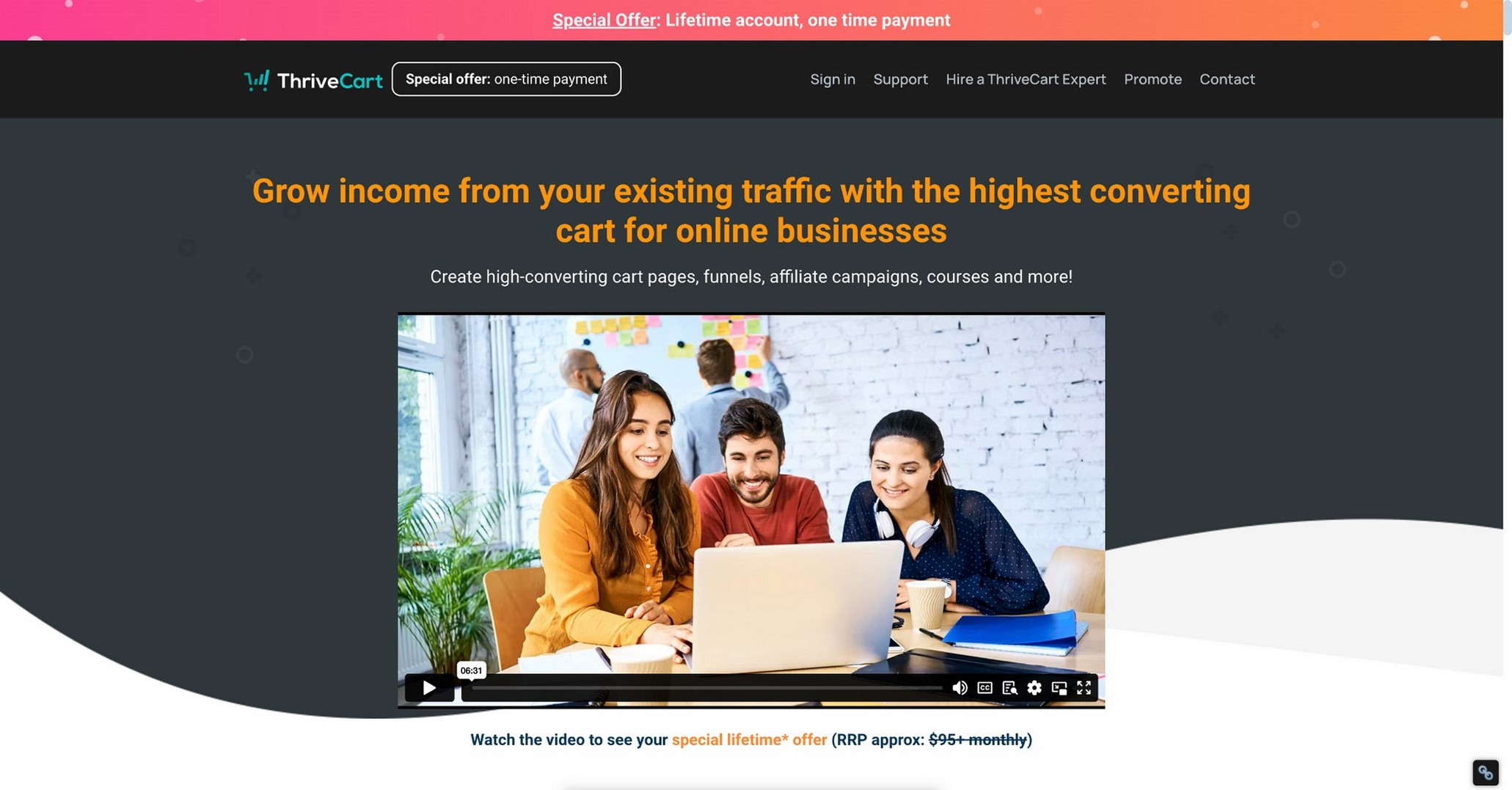
ThriveCart is a checkout and cart platform that runs on a one-time payment model with no monthly subscription and no annual renewal for the base plan.
You pay $495 once for the Standard plan and that’s it. The Pro upgrade adds affiliate management, advanced reporting, and custom domains for an additional $195 one-time, bringing the total to $690.
For businesses that have been paying $79 to $200/month for checkout tools, those numbers tend to land differently once you do the math.
That said, ThriveCart has been signalling a move toward recurring pricing for some time.
The lifetime deal is described as a limited-time offer. The newer Pro+ tier, which replaced the original Pro plan, now carries a $295/year annual fee rather than a one-time cost.
The base $495 deal still exists, but treating it as permanent would be optimistic.
What it does well
- Lifetime pricing on the base plan – One payment, no recurring fees from ThriveCart itself. Your payment processor (Stripe, PayPal) still takes its standard cut, but ThriveCart doesn’t add anything.
- High-converting checkout pages – A/B testing, order bumps, one-click upsells, embeddable checkout and Pay What You Want all included. The checkout builder is genuinely capable.
- Affiliate management – The Pro plan includes a full affiliate centre with tracking, commissions and payouts. SamCart now includes affiliate management in their base plan but ThriveCart’s one-time pricing still makes it the lower long-term cost for affiliate-heavy businesses.
- Course delivery – ThriveCart Learn is included with the Standard plan, covering unlimited courses, modules and students. Learn+ is an optional upgrade for more advanced needs.
- Subscription and payment plan tools – Recurring billing, free trials, payment plans and a subscription saver that recovers failed payments automatically.
What to keep in mind
- No free plan and no free trial. There’s a 30-day money-back guarantee, but you’re writing a $495 cheque before you see a single page load.
- Custom domains require the Pro plan. On the Standard plan, checkout pages are hosted on a ThriveCart URL. For a branded checkout experience, the $690 total is the real minimum.
- The Pro+ annual tier ($295/year) is a sign of where this is going. If the lifetime deal matters to you, don’t assume it will be there next year.
- It’s a checkout tool, not a full funnel builder. There’s no built-in page builder, email marketing, or traffic source. Same limitation as SamCart, you still need a way to get people there.
- Not WooCommerce-compatible. Runs entirely outside WordPress.
ThriveCart vs ClickFunnels
ClickFunnels and ThriveCart are solving different problems.
ClickFunnels builds the funnel from top to bottom with traffic capture, lead nurturing, checkout, follow-up. ThriveCart handles the checkout end of that process exceptionally well and stops there.
The cost comparison gets interesting. ClickFunnels at $97/month costs more than ThriveCart’s $495 Standard plan within six months. Over three years, the gap is several thousand dollars.
If you already have a traffic source and just need a checkout that converts, with affiliate management and solid subscription handling, ThriveCart makes the monthly recurring model look hard to justify.
8. OptimizePress: Best ClickFunnels Alternative for WordPress Landing Pages and Lead Generation
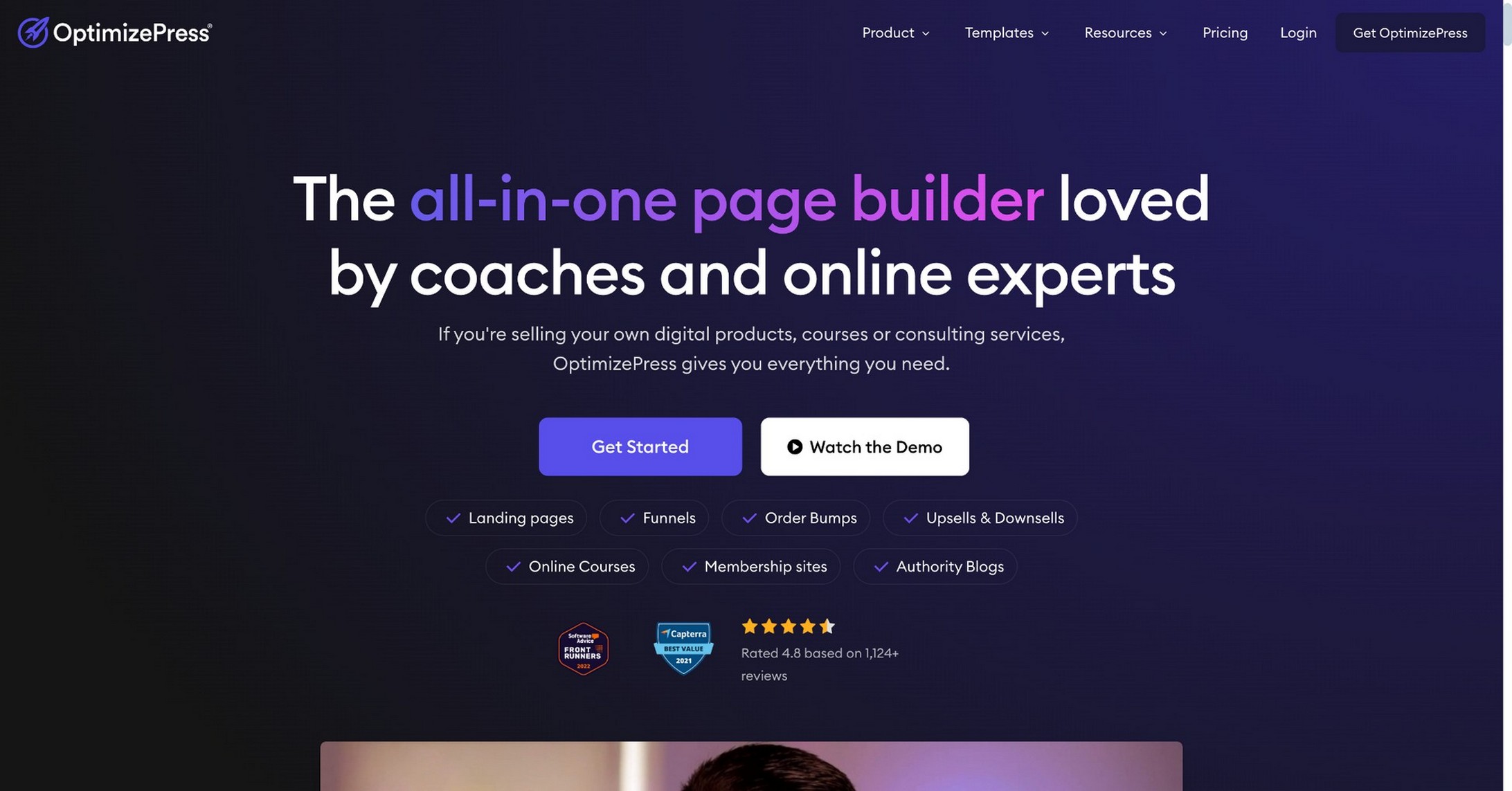
OptimizePress is a WordPress plugin suite built around one core job, creating high-converting pages inside your existing site.
Landing pages, sales pages, opt-in forms, membership portals, checkout pages and basic funnels, all handled through a live drag and drop editor without leaving WordPress.
OptimizePress has been around since 2010. In a category full of abandoned plugins, that matters. The page builder is mature, the template library is large and the setup is very straightforward.
Plans start at $99/year for the Starter tier (1 site) and go up to $179/year for the Ultimate plan (10 sites).
Both renew at a higher rate ($129/year and $249/year respectively), so it’s worth factoring that into the cost comparison.
What it does well
- Landing page and sales page builder – 250+ conversion-focused templates, 40+ custom elements and a live editor that shows changes in real time. The template library is one of the largest in the WordPress page builder category.
- Built-in funnels – OptimizeFunnels handles multi-step funnel flows with pre-built templates. Not as advanced as CartFlows or FunnelKit, but functional for standard lead-gen and sales sequences.
- Checkout and payments – OptimizeCheckout accepts payments directly on your pages through Stripe and PayPal. No separate cart plugin needed for straightforward digital product sales.
- Membership sites – Build gated content areas and course portals without a separate membership plugin. The Ultimate plan includes the Mentor feature for more structured course delivery.
- Works with any WordPress theme – No conflicts, no forced design constraints. This sounds obvious but a surprising number of page builders break with certain themes. OptimizePress does not.
What to keep in mind
- It’s a page builder and funnel tool, not a full eCommerce solution. For WooCommerce stores running complex checkout flows, upsells and order bumps, CartFlows or FunnelKit will go further.
- One Capterra reviewer noted the checkout integration with WooCommerce and CartFlows requires additional setup and extra plugins. If your stack already includes those tools, OptimizePress may create overlap rather than simplify things.
- Renewal pricing is notably higher than the first-year rate. The Starter plan goes from $99 to $129 on renewal, the Ultimate plan from $179 to $249. First-year pricing is the promotional rate, not the long-term cost.
- No free plan and no free trial. There is a 14-day money-back guarantee though.
- No API available, which limits custom integrations for more technical setups.
OptimizePress vs ClickFunnels
OptimizePress and ClickFunnels are both funnel and page building tools, but they sit on opposite ends of the platform spectrum.
ClickFunnels is a standalone hosted SaaS, meaning your pages live on their servers. OptimizePress is a WordPress plugin, so everything stays on your own site.
On price, $99/year for OptimizePress against $97/month for ClickFunnels is not a close comparison.
What ClickFunnels gives you in return is a more complete out-of-the-box experience, with built-in email, payment processing and more guided funnel building.
OptimizePress gives you more control and a lower cost. It expects you to already have WordPress set up and be comfortable managing your own tool stack.
9. SeedProd: Best Budget ClickFunnels Alternative for Simple WordPress Funnels
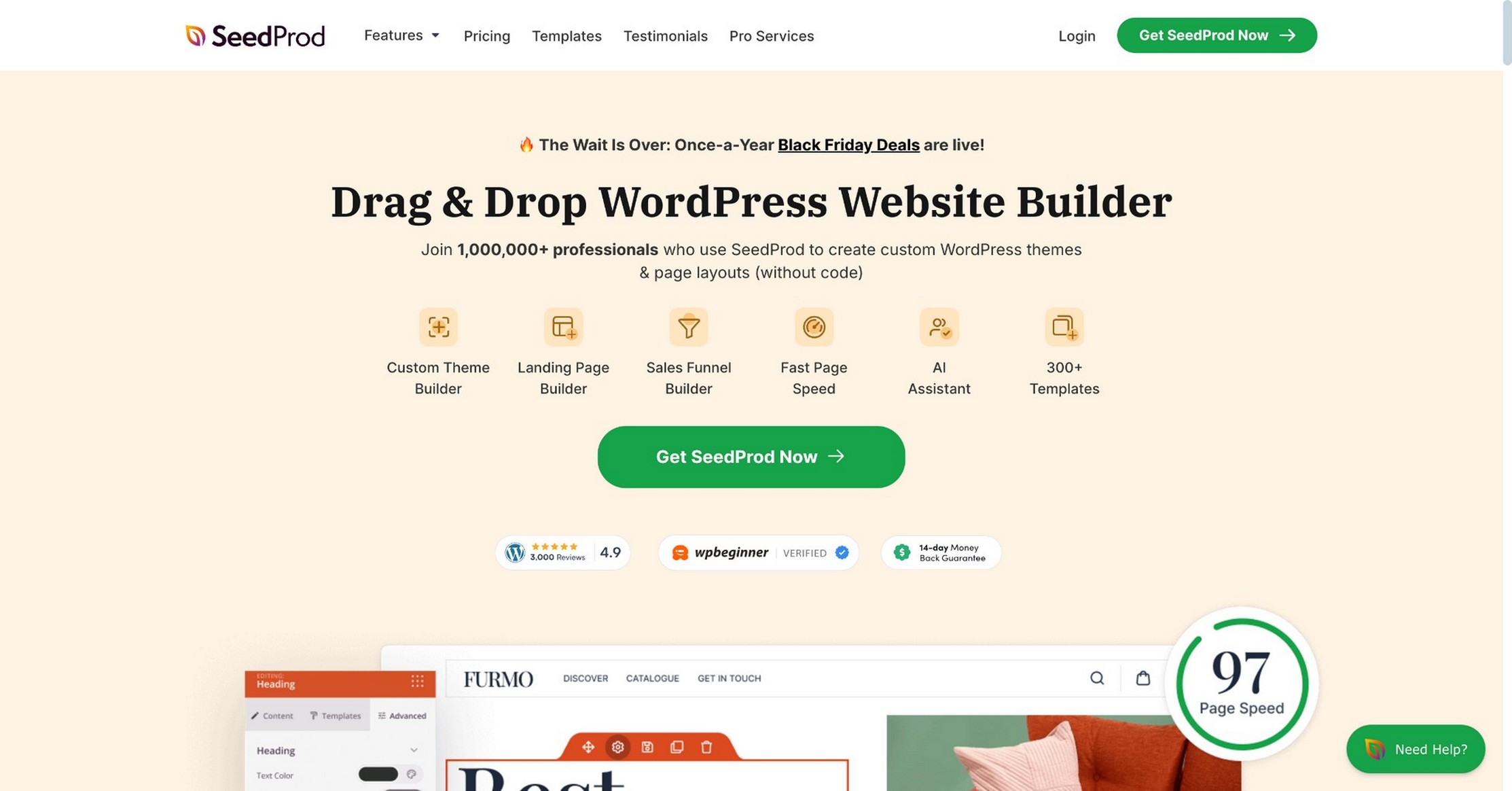
SeedProd is a WordPress page builder that started as a coming soon and maintenance mode plugin and has grown into a full landing page and website builder.
It is not a funnel builder in the same sense as CartFlows or FunnelKit. There are no native upsells, order bumps, or checkout optimization tools.
What it does well is let anyone build clean, fast-loading WordPress pages quickly. At $39.50/year, nothing else on this list comes close on price.
There is a free version available from WordPress.org with no expiry date.
Basic landing pages, coming soon pages, and maintenance mode are covered at no cost.
Paid plans start at $39.50/year for the Basic tier (1 site). Full WooCommerce integration is unlocked on the Pro plan at $199.50/year, with the Elite plan at $239.60/year adding WooCommerce and EDD support for up to 100 sites.
What it does well
- Speed and simplicity – The drag and drop builder is lighter than Elementor or Divi and produces faster-loading pages. If you have ever waited 30 seconds for an Elementor page to save, you’ll feel the difference immediately.
- Landing page variety – Sales pages, opt-in pages, webinar pages, coming soon pages, 404 pages, login pages and thank you pages, all covered. Over 300 templates across plan tiers.
- The free version is genuinely functional – Not a stripped-down trial. The free plan builds real landing pages and coming soon pages indefinitely. Most page builders at this price point gate everything useful behind a paywall. SeedProd does not.
- Theme builder – From the Pro plan upward, SeedProd can build a full custom WordPress theme, covering headers, footers, archive pages and more, without touching code.
- Email marketing integrations – Connects with Mailchimp, ActiveCampaign, AWeber, ConvertKit, Brevo and others from the Plus plan. Useful for lead capture flows.
What to keep in mind
- No upsells, order bumps, A/B testing, or checkout optimization. If those are the features driving your funnel strategy, SeedProd is not the right tool. CartFlows does all of this natively for a similar price.
- Full WooCommerce integration requires the Pro plan ($199.50/year) or higher. The comparison table entry of “Partial” reflects this: basic WooCommerce blocks exist on lower tiers, but full store customization needs Pro or above.
- Introductory pricing applies on first purchase, with renewals at the full rate. It’s worth checking the renewal cost before committing to an annual plan.
- The free version has no email integration, no premium templates and no theme builder. Useful for testing the interface, but most real use cases will require a paid plan quickly.
SeedProd vs ClickFunnels
These two tools are not really competing for the same buyer.
ClickFunnels is built for people who want a complete, self-contained funnel system: traffic, pages, checkout and follow-up, all in one platform.
SeedProd is built for WordPress users who need good-looking pages fast and cheaply.
At $39.50/year against $97/month, the price gap is dramatic, but so is the feature gap.
If you need a full funnel, SeedProd leaves too much work to other tools. If you need landing pages inside WordPress and have the rest of your stack already sorted, SeedProd is the most affordable way to get there.
10. Builderall: Best Budget All-in-One ClickFunnels Alternative
Builderall is a hosted SaaS platform that bundles a website builder, funnel builder, email marketing, course hosting, webinar tools, chatbot builder, SMS marketing and around 25 to 50 additional tools into a single subscription.
The pitch is maximum tool variety at minimum price. The Core plan starts at $17/month and the top-tier Premium plan runs around $47/month.
If you’re paying five separate subscriptions to cover the same ground, the price argument is real.
The honest version of that pitch, though, is that breadth comes at the cost of depth.
Individual tools inside Builderall are generally less polished than their standalone counterparts. The funnel builder works but it’s not as refined as CartFlows. The email tool works but isn’t as capable as ActiveCampaign.
If you need the best version of any one tool, Builderall is not it.
What it does well
- Tool volume at low cost – Website builder, funnel builder, email marketing, course hosting, webinars, and CRM under one login at $17 to $47/month. For early-stage businesses running on tight margins, the consolidated billing is genuinely attractive.
- No transaction fees – Builderall doesn’t take a cut of your sales on any plan. You pay your payment processor’s standard rate and nothing else on top.
- Webinar builder included – Live and evergreen webinars are built in from the Marketer plan upward. Most platforms at this price point charge extra for webinar functionality or don’t include it at all.
- 14-day trial and 30-day money-back guarantee – Low financial risk to test whether the consolidated approach works for your specific use case.
- Course and membership hosting – Build and sell online courses from the Marketer plan, without a separate platform like Teachable or Thinkific.
What to keep in mind
- The tools are broad, not deep. A Capterra reviewer put it plainly: “jack of trades, master of none.” If any single capability (email, funnels, or courses) is central to your business, a dedicated tool will likely outperform Builderall.
- Builderall’s pricing has changed multiple times over the years where plans were added, removed, renamed and repriced. The platform has a history of instability on this front that is worth factoring into a long-term commitment.
- No WooCommerce-native integration. It is a self-contained SaaS platform that runs outside WordPress entirely.
- Email list limits apply on lower tiers. The Core plan has a subscriber cap. Exceeding it means upgrading or paying for a high-volume email addon.
- The free plan referenced in some older reviews no longer exists. Current entry point is $17/month with a 14-day trial.
Builderall vs ClickFunnels
Both are hosted SaaS platforms, but they target different kinds of buyers.
ClickFunnels is focused specifically on funnel building and does it well with polished templates, a guided workflow and a large user community.
Builderall tries to cover the entire marketing stack at a lower price, with the expected tradeoff of lower quality per individual tool.
At $17/month versus $97/month, the price difference is substantial.
If you’re early-stage and not yet sure which tools you actually need, Builderall is a reasonable starting point.
If you have specific funnel requirements, the quality gap becomes a practical problem quickly.
Which ClickFunnels Alternative Is Right for You?
Use WordPress and WooCommerce? Choose CartFlows. Free plan available, paid plans from $189/year. Covers upsells, order bumps and checkout optimization without leaving WordPress. A/B testing on the Pro plan ($299/year).
Need WooCommerce funnels plus built-in email automation? Use FunnelKit. More powerful, steeper setup. Budget for the Professional plan at $399/year where automation actually unlocks.
On WordPress but only need landing pages and lead capture? Use OptimizePress ($99/year) or SeedProd ($39.50/year). Both are straightforward WordPress page builders without the WooCommerce dependency.
Not on WordPress, just getting started? Use Systeme.io. The free plan covers 3 funnels, 2,000 contacts, and 0% transaction fees. No credit card required.
Not on WordPress, need a full marketing stack? Use Kartra ($119/month). Covers funnels, email, video hosting, affiliates and a help desk under one roof.
Selling courses or memberships? Use Kajabi ($143/month billed annually). Best student experience on the market. Expensive, but purpose-built for this model.
Already have traffic, just need a better checkout? Use ThriveCart ($495 one-time) or SamCart ($79/month). ThriveCart wins on long-term cost, choose SamCart if you prefer monthly billing.
Want ClickFunnels features without the monthly fee? Use FunnelKit if you use WordPress. Use Kartra if you don’t.
Final Thoughts
ClickFunnels works. It’s also $97/month ($1,164/year) for a platform that hosts your funnels on their servers, sends you a bill every month and keeps your data on their side of the fence.
If you’re on WooCommerce, CartFlows does the same job from $189/year, inside your own site, with a free plan that lets you test it before committing to anything.
If you don’t use WordPress, Systeme.io if you are just starting, Kartra if you need the full stack, Kajabi for courses, ThriveCart or SamCart for checkout.
Start with the free plan. If it delivers what you need, upgrade. If it doesn’t, you’ve lost nothing.